Maine 2012 and Money

Ernest and I arrived at our little retreat in Maine at the very end of July. Our little cottage was in fine shape. Invisible hands—and checks—had seen to it that we had a new water heater, a brand new dock, a new granite stove pad, and new carpeting for my beloved writer’s studio. We experienced the usual joy of rediscovering the spectacular landscape of Mount Desert Island, and the “stuff” we had collected to embellish our retreat. Nevertheless, it seems to take me longer than usual to attain my usual summer serenity.

Perhaps serenity will escape me altogether this year, its absence largely related to money—not necessarily mine, because I earned my relatively small income during America’s golden years when I could save and invest some of it during better economic times—but that of the nation. This November we will go to the polls to choose a new president. It is a very serious decision; the well-being of the nation depends on it. I believe that neither candidate can predict the outcome of the economy. It will be influenced by many factors, most beyond presidential control.

What I do know, however, is that currently the Republicans gloat that they will “outspend President Obama ten to one.” According to their estimates they will spend more than a billion dollars on this election! Apart from the fact that I object to the fact that politicians assume that the votes of my fellow Americans can be bought, I wonder what else we could buy, more ethically, with this billion dollars: school lunches, maintaining customary hours for libraries, birth control for those who want it so as to reduce abortions, retraining the unemployed, prenatal care, reducing drug cost for seniors…

The last brings me to the Supreme Court’s decision to uphold the Affordable Health Care Act, modeled after former Governor Romney’s plan for Massachusetts. Now this modest health protection plan is depicted as creeping socialism. Nobody likes regulations and big government, but I have encountered few people who object to mandatory car insurance, or the existence of police and fire departments.

We are probably the only industrialized country that does not have universal comprehensive health insurance. Europeans cannot understand why we don’t and neither do our Canadian neighbors to the north. Thanks to employer-provided health insurance I have two artificial joints and 40+ years of treatment for severe glaucoma—a serious eye disease. I see and walk and fortunately do not burden either my family or the nation. I want my fellow citizens to do as well.

America has always thrived on free enterprise. Yet we always were a kind, welcoming, egalitarian, generous nation, ready to help its citizens to do well. Let us keep it that way to the best of our ability.
Posted in Uncategorized | Tagged , , , , , , , , , , , | 1 Comment

Dining with the Rockefellers

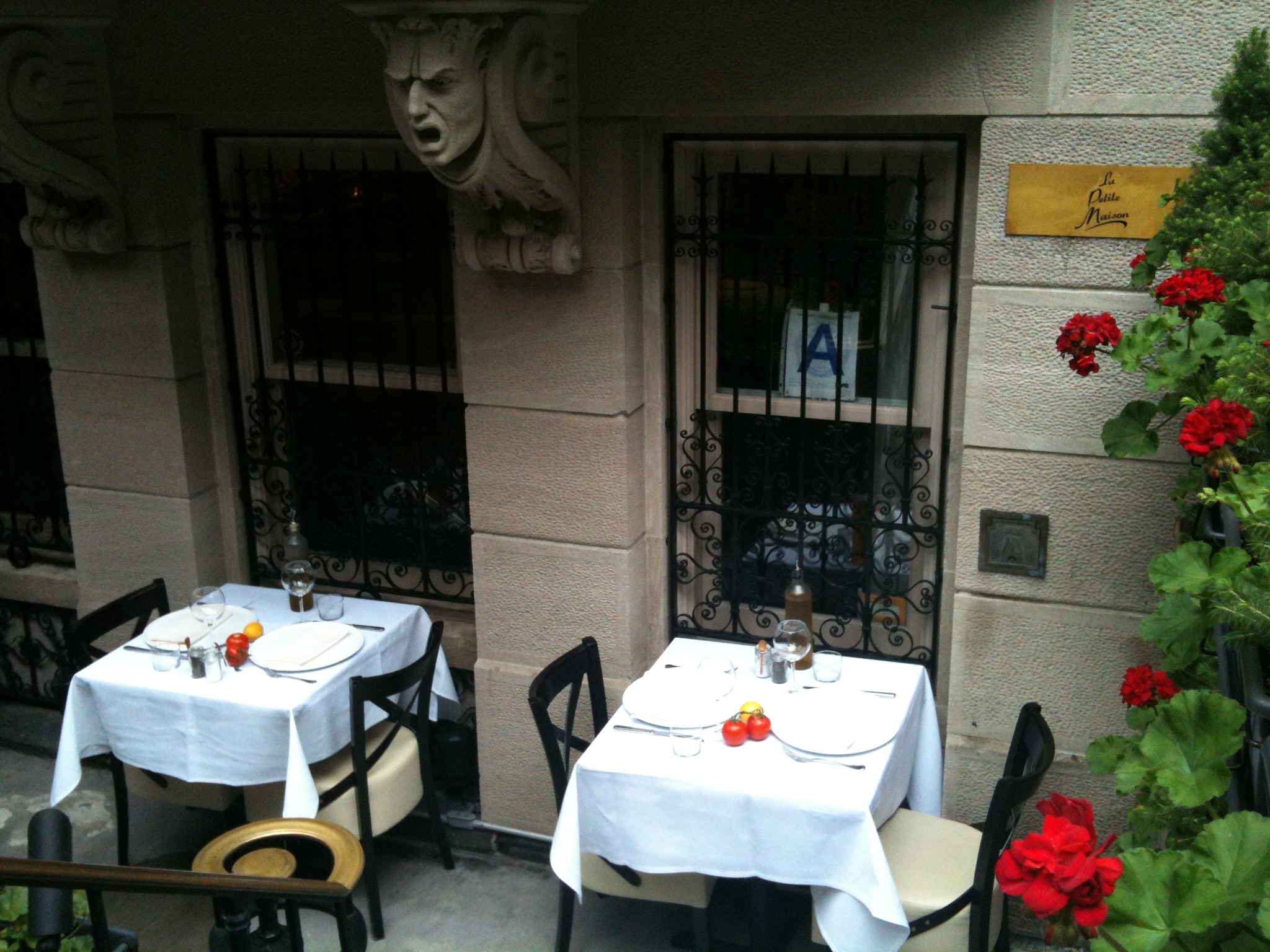
La Petite Maison

The other day I lunched at La Petite Maison, an upscale restaurant located at 13 W. 54th Street, the house to which the newly wed Mr. and Mrs. John D. Rockefeller Jr. moved in 1901. It was here that his wife, Abby Aldrich, gave birth to five of their six children. Thereafter the couple moved across the street to a nine-story brownstone designed by William Welles Bosworth. This house, located at 12 W. 54th Street, as well as that of John D. Rockefeller, Sr. at 4 W. 54th Street, no longer exists, but the block is still reminiscent of the family’s sixty-years-long tenancy.

Much of the south side of block is now occupied by the Museum of Modern Art, which much to her husband’s consternation, Abby and her friends founded in 1929. The museum, referred to in the family as “Mother’s Museum,” moved to 53rd Street in 1939, and 97-year-old David Rockefeller is still its Chairman Emeritus.

The Rockefellers had also bought up property on the north side of 54th Street. During the 1930s, Nelson Rockefeller and his favorite architect Wallace K. Harrison built the striking Rockefeller Apartments at 17 W. 54th Street. In 1957, Nelson opened the nascent Museum of Primitive Art—now part of the Metropolitan Museum of Art—at 15 W 54th Street.

13-15 W. 54th Street

A historical plaque on 13-15 W. 54th Street informs us that Henry J. Hardenbergh, best remembered for his historical Dakota apartment house and the Plaza Hotel, designed the houses in 1896-1897. At that time there was a concerted and successful effort to turn the area into an upscale residential neighborhood. Indeed the Vanderbilts, in their fancy mansions, lived just around the corner.

I presume that John D. Rockefeller, Jr. would neither have approved of disapproved of La Petite Maison. In the five years I spent researching America’s Medicis: the Rockefellers and Their Astonishing Cultural Legacy, I never stumbled upon a document that discussed his culinary tastes. The Rockefellers were staunch, observant Baptists. Alcohol was forbidden, and too much indulgence in food was certainly frowned upon. Junior probably adhered to the French proverb: “We must eat to live, not live to eat.”

I did enjoy my lunch at La Petite Maison, which has other outposts in Nice, Cannes, London and Dubai. The greens of my caesar salad and its croutons were crisp, the slivers of Gruyere fresh. The pan-seared calamari was soft and not overcooked; the tomato sauce they were served in added just the right tang. The flan was as creamy and sumptuous as flan should be. Naomi, my granddaughter and restaurant-exploring pal, had mushroom risotto and tiramisu. She said that the risotto was as good as the one I make. Since it is one of my signature dishes, her judgment represents an accolade. The tiramisu was excellent.

Even though there is no physical resemblance between the Rockefeller kitchen that must have occupied this below-street-level space a hundred years ago and the sleek bar and festively set tables of La Petite Maison, I was content. The perfect fresh tomatoes and lemons that decorate the little tables were unusual, as was the bread served in brown paper bags. I basked in the historical atmosphere of my hometown, which constantly renews itself.

Posted in Uncategorized | Tagged , , , , , , , , , , , , , , , | 3 Comments

A Boutique Wine Blossoms in the Desert

Sde Boker Winery

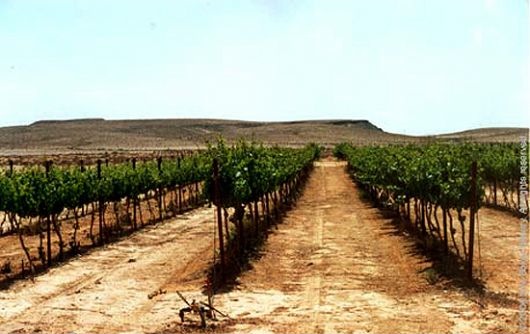
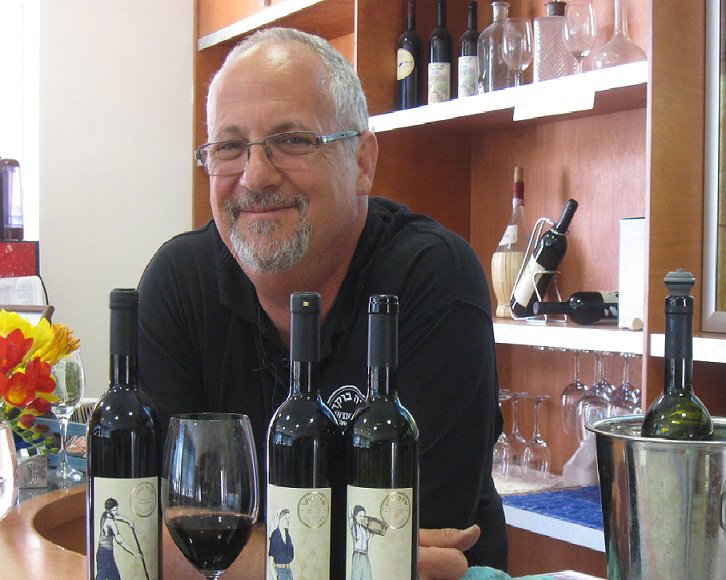
Zvi Remak does not complain about traffic jams, but once in awhile a car stops at Sde Boker’s gift shop to buy the excellent Cabernet Sauvignon and Merlot produced on the kibbutz. The wine is clearly Zvi’s baby. Back in 1994, he started dreaming of growing grapes in the Negev Desert. A year later he planted his first vines—four varieties grafted onto two different rootstocks. Eventually he harvested a small crop and made his first wine.

A few years later, he, his wife Janet and their four daughters returned to Zvi’s native California so that he could study winemaking at Napa Valley Junior College. He supported the six of them by working any wine-related job he could find.

The Negev, stretching south of Israel’s large cities, is a vast desert. It was not always so. Archaeologists dug up wine presses and other evidence that the Nabateans used here around 700 BCE. The region continued to produce wine during Byzantine times and a large farm or village flourished at Sde Boker itself between the late 7th to the early 9th century CE. Then the soil eroded. In 1952, a group of Jewish settlers started to wrest a living from the parched soil. With water brought in from afar they grew peaches, apricots, nectarines, pistachios and other fruit, but in time these crops proved unprofitable because of competition from Israel’s less arid Galil. The kibbutz kept looking for new crops, especially those that would grow on the newly discovered underground layer of brackish water. Small, sweet tomatoes, a harbinger of a soil appropriate for grapes, appeared to thrive. Grapes followed, though unfortunately they need fresh water.

Zvi Remak, winemaker.

Sde Boker’s wine venture is still Zvi’s baby. He prunes the vines, controls their exposure to sunlight, tastes the sugar content and acidity of the grapes. Then he supervises their harvesting, destemming, crushing, fermentation, pressing, aging, bottling and many other steps involved in making superior wine. Finally Zvi proudly affixes a label created by his designer daughter Avigail.

In today’s world nothing is simple. Recently, someone discovered that the small winery is outside the kibbutz commercial zone! Until this matter is straightened out, Zvi has to find temporary quarters elsewhere. Help, however, may be on the way.  Kibbutz Sde Boker was the beloved home of Ben Gurion, Israel’s famous first prime minister. His modest abode, which is located across the street from Zvi’s winery, is now a tourist destination. Sde Boker hopes to build a small hotel to accommodate the flow of visitors to the Ben Gurion home, its small museum or those who want to experience the vastness of the Negev.

Posted in Uncategorized | Tagged , , , , , , , , , | Leave a comment

Winston Churchill, Queen Elizabeth II, and the Little Ships

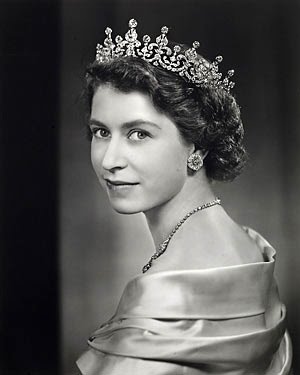
Princess Elizabeth, 1951.

For me, the first week of June 2012 was very emotional. First of all, there was The Queen’s Diamond Jubilee. Now in her mid-eighties, Elizabeth II has been a constant presence in my life. I admired her parents’—King George VI and another Queen Elizabeth—decision to keep her and her little sister in London during the Blitz. And now I was impressed by the  present Queen’s decision to go on with the pageantry even though Prince Philip, her husband of 65 years, had taken ill after the naval parade.

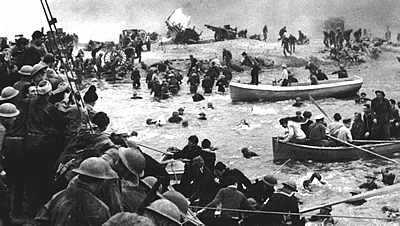
The Dunkirk Evacuation, 1940.

It was actually the naval parade that elicited my strongest reaction because it emphasized the part that the “little ships,” piloted by ordinary English boat owners, played in saving Britain’s Expeditionary Forces stranded in Belgium and France. At the time I was one of the ever-decreasing number of civilians that witnessed the operation. In May 1940, my family had fled Brussels for France, attempting to escape the advancing German armies. Our route, via the Belgian seacoast, was shared by millions of others, and many of us got stuck in a small pocket that included Dunkirk. There was a total news blackout in both continental Europe and in England, but the British population guessed that their boys were in trouble. Anyone who owned a pleasure boat, fishing vessel, trawler, coal barge or even a ferry sailed across the British Channel to rescue their country’s army. When I lecture to school classes about my own survival (At The Mercy of Strangers: Growing Up On The Edge of The Holocaust), I always tell my listeners that even in our power-driven society each person is responsible for their own actions and can make a difference.

The same week as the Queen’s Jubilee, I visited the Morgan Library’s new show: Churchill: The Power of Words. The one-gallery exhibit summarizes the statesman’s career, but it is really the playback of eight of his landmark speeches that transported me back to Brussels where all those trapped in Europe hung on his words. Some of his sound bites—dark ages, their finest hour, sacrifice, courage, summit, free nations, the English-speaking people, Iron Curtain—as well as his operatic voice still resonate in the minds of all those who heard him. The occupying Nazis mocked the prime minister. For weeks, posters were plastered across Brussels, depicting Churchill grasping a microphone amidst ruins. Referring to a then-popular musical, the prime minister allegedly said, “Everything is OK, Madame La Marquise, even though the barn burned, the horses are dead, and the house is ruined.”

At the Morgan, Churchill’s image is flanked by contemporary photographs of Londoners in their shelters, bombed out Coventry Cathedral, the Churchill-Roosevelt-Stalin meeting, George VI and his queen visiting ruins, and eventually the royal family, including a young Princess Elizabeth in uniform, standing on the same balcony from which she greeted her people during her jubilee.

In a different, but perhaps even more insidious way, our world continues to be engulfed in bloodshed and genocide. Where are the leaders that can galvanize the people of good will to help us emerge from the morass?

Posted in Uncategorized | Tagged , , , , , , , , , , | 3 Comments

Rachel Shavit Bentwich at the Hecht Museum in Haifa

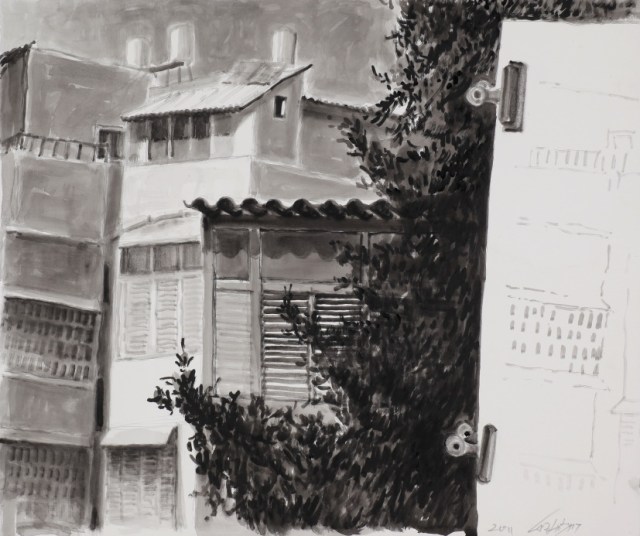
I met Rachel Shavit Bentwich in 1954, when she arrived in America with her spouse Nechemia Shavit–my husband Ernest’s classmate at the Hebrew University in Jerusalem–and her son. Rachel was to spend a year studying art at the University of Wisconsin. We have been friends ever since, even though most of the time 7000 miles separate us. My house is filled with Rachel’s works: early representational images of buildings, and her later more abstract ones. One of these is of a small house her aunt built in Zichron Ya’akov in the early twentieth century, which everybody takes for a Maine cottage. Our 2012 trip to Israel was occasioned by Rachel’s show at the Hecht Museum at the University of Haifa.

The first thing that catches one’s eye upon entering the exhibition is the artist’s self-portrait, not as you might expect a picture of an attractive woman, but a mural depicting her spacious studio. In actuality the latter is a small, enclosed terrace overlooking the roofs and backyards of her Tel Aviv home. The mural is filled with two easels, one propping up a canvas that is being painted on by a surrealistic hand. A comfortable Victorian armchair occupies the center of the mural. Elsewhere we stumble across a copper pot filled with flowers, and a chest whose top is overflowing with paints, jars and brushes. The surrounding trees, houses, roofs, windows, shutters and chimneys form a protective cocoon around Rachel’s intimate world. Indeed, the current show is entitled “From Within the House.” It is all about looking out and looking in, about light and shade and about the drama of the familiar and ordinary.

Rachel Shavit-Bentwich’s mural will be destroyed at the end of the three-month exhibition. Fortunately, much of its imagery is permanently recorded on canvases that fill this retrospective. We find the easel and a chair draped with a sweater in paintings dating from 1991. There are sharp-edged paintings entitled Window and Shadow, Corrugate Roof and Shadow, Shutter and Shadow, all dating from the 1970s, as well as a sketch, From Within the House, made in 2011, perhaps in preparation for the mural itself.

A few days later we visited Rachel at home and saw the view from her studio through her eyes. The gutters, corrugated roofs, trees, windows and chimneys took on another dimension. Her walls were covered with actual portraits, photographs and other mementos of her remarkable ancestors all of whom participated in the rebirth of the Jewish Homeland. The day after the visit my husband and I flew off worrying about the fragile peace that surrounds Rachel’s world.

Posted in Uncategorized | Tagged , , , , , | 1 Comment

A Sentimental Trip to the Holy Land

To celebrate spring and, with some delay, the completion of my Rockefeller opus, husband Ernest and I decided to visit our past: Israel and Paris, both in their various ways engulfed by conflict. It was an emotion-laden trip for my husband, who grew up in Israel. The fact that it shelters sites of crucial importance to three of the world’s major religions increases the country’s importance and vulnerability. Mythically Christianity, Judaism, and Islam trace their beginnings to the same ancestor–Abraham–who himself migrated to this part of the Near East from Mesopotamia thousands of years ago. Why do religions–which all profess man’s essential goodness–cause, and have always caused, so much strife?

I have lived through enough anxious times to know that daily life is amazingly normal even when one’s surrounding are deeply troubled. Our trip to Israel was great. We visited Haifa, Jerusalem, Tel Aviv and the kibbutz Sde Boker in the Negev. Each of the cities had grown tremendously since I last visited some fifteen years ago, and each has its own charm as well as indoor malls and familiar brand-name stores.

In Jerusalem we stayed in the Hotel Eldan, within walking distance of the Old City, beautiful as always, with its narrow streets and old buildings hewn out of yellow stone. The ancient synagogues, churches, mosques, Jesus’s Stations of the Cross, and remains of Roman and Byzantine occupations, are concrete reminders of history’s reality.

In Tel Aviv, our abode, Hotel Cinema, is part of the unique, now verdant “White City,” consisting of 4,000 Bauhaus-style houses dating from the 1930s-50s. The lobby of the Cinema Hotel, a former movie house, distributes free popcorn to be nibbled while watching a continuous display of old movies. In 2003, the White City became a UNESCO World Heritage site.

Haifa, located on the Carmel mountain range adjoining a bay, is strikingly reminiscent of San Francisco. We stayed at the Dan Promenade Hotel, walked along the Louis Promenade, and descended 685 steps in the Bahai Gardens, all along drinking in the view of the shimmering Mediterranean.

On our way down to Sde Boker, Israel’s first prime minister David Ben-Gurion’s old kibbutz, we stopped at the Beersheba market, filled with the biggest grapefruit, artichokes and melons I have ever seen. We also encountered camels and Bedouin tents, equipped with TV dishes. The kibbutz is vibrant, though it has abandoned its former rigid communal style. Still, as I was making my way through the alleys that separate small individual habitations, I was enveloped by the general friendliness and goodwill that prevailed here as well as in the rest of the country.

What will happen in the Near East? Perhaps those in charge of our fates will come to their senses and let us all of us go on with our little lives.

Posted in Uncategorized | Tagged , , , , , , , , , , , , , , , , , | Leave a comment

My Annual Visit to the Brooklyn New School

The end of May usually finds me visiting the Brooklyn New School (BNS), the alma mater of my three grandchildren. There I talk to four fifth-grade classes about my book, At The Mercy of Strangers: Growing Up on the Edge of the Holocaust, a memoir that covers the eight years I spent in Belgium before, during and after World War II,.

The news media frequently examines the sad state of New York City’s public schools: absenteeism, lack of learning, rowdiness, poor reading skills; but none of these shortcomings are apparent at BNS. The children are attentive, polite and know more about what went on in Europe during World War II than many adults. They understand the meaning of the word anti-Semitism, which I have to explain to other groups I lecture to regularly.

I realize that my experiences during the Holocaust were benign compared to those who survived the camps. Like Anne Frank’s family, my mother, sister and I (my father was out of the picture because he had been forcibly deported to France, from where he reached the safety of the United States) did not heed the order to report to the alleged work camps.

My mother, my sister and I split up and hid separately “in plain sight.” In the course of the next two years, eight different families, none of whom had decided beforehand to be heroic, offered us shelter, even though they were endangering their own lives. Others saw to it that we received essential food stamps, false papers and other necessities. During my lectures, I spend a lot of time stressing how crucial it is for individuals to listen to their heart and act accordingly.

Some parents question the wisdom of teaching the Holocaust and its horrors, but genocides and crimes of humans against fellow humans is on the increase. It is important to stress that we are all responsible for our acts and that individual courage does make a difference. At BNS we talked about how Paul Rusesabagina, a simple hotelkeeper, single-handedly saved 1,268 people during the genocide that claimed one million lives in Rwanda in 1984.

I love talking at BNS. I identify with my audience because I was about their age when I had to manage to survive under very difficult circumstances. I tell them about my past fears and triumphs. Seeing me now, as a contented, successful member of society, may help them realize that most of us have the power to surmount a difficult youth. By sharing what I have learned, I pay tribute to those who helped me when I was in need.

Posted in Uncategorized | Tagged , , , , , | 2 Comments

The ASJA Founder’s Award for Career Achievement

I was sitting in the ballroom of the Roosevelt Hotel in New York at the 2012 annual meeting of the American Society of Journalists and Authors (ASJA). Regina Ryan, my agent, Ernest, my husband, Judy, my daughter, and Naomi, my granddaughter, surrounded me. My friend and colleague, Sally Wendkos Olds, mounted the podium and spoke:

“Suzanne Loebl has been a loyal, devoted, active member…She is not, however, getting this award for her extensive service to us, but on the strength of her impressive body of writing…

“The most recent of Suzanne’s 14 books, just published to glowing reviews, is America’s Medicis: The Rockefellers and Their Astonishing Cultural Legacy, which has resulted in speaking invitations for her around the country. Her other book about art is America’s Art Museums, which delves into the history and growth of 160 great museums…”

I had known since last winter that my friend Bonnie Remsberg had nominated me for ASJA’s 2012 Founder’s Career Achievement Award, the organization’s most prestigious honor. Among the reasons Bonnie gave of my worthiness was that I had learned to use my own experiences and translate them into compelling prose.

“Suzanne is a survivor of the Holocaust; she wrote a book about it,” Bonnie wrote to ASJA’s award committee, “She lost her beloved son David to the AIDS epidemic; she wrote a book about it. Her mother-in-law died of a fatal drug interaction. She spent five years writing The Nurse’s Drug Handbook, to teach nurses about drugs. The enormous  (1,000-plus pages) book was an instant and huge success, its seven editions selling more than 350,000 copies…Decade after decade, she is still turning out publishable prose…she is an example to us all.”

Receiving this award was the biggest honor I have received so far. It was the culmination of years of hard and joyful work. Though I always knew that I wrote easily and well, I never conceived that I would become a professional writer, especially since English was not my first, or even my second language.

When I joined ASJA in 1975 we were all pecking away at our electric typewriters. At our meetings, we endlessly discussed the possibilities of these new-fangled computers! Today we try to understand how the ever-changing social media impacts our careers. Thank you, ASJA, for the award and for keeping me on my toes.

Posted in Uncategorized | Tagged , , , | 1 Comment

Christie’s Spring Sale

Several times a year, I spend money vicariously at Christie’s, Sotheby’s, Phillips, or another one of New York’s upscale auction houses. This year I indulged myself at Christie’s. Given the escalating prices of admission fees to museums, visiting upcoming auctions is one of New York’s best bargains; even the girl at the coat checkroom does not accept tips.

Going to these exhibitions is different from visiting a museum. Works are hung pell-mell, and you have to decide whether any are museum quality, the minor work of a great painter, so-so or just plain bad. I love testing my identification skills. Is that work by Henri Matisse or by Andre Derain, by Picasso or Juan Gris?

This year, magnificent works of art abounded at Christie’s. There were scores of Picassos, including a small profile of Marie Therese, one of his mistresses, sleeping. There were paintings by Matisse, Munch, Braques, Leger, and Rouault, and an unusually large number of works by Rene Magritte, the Belgian Surrealist.

The most coveted prize of this sale is a watercolor sketch of Paulin Paulet, one of five paintings in Paul Cezanne’s The Card Players series. The sketch arrived in the United States with Mr. and Mrs. Ernst Eichenwald, who fled the Nazis in Germany in 1936. Their son Heinz, a renowned Texas pediatrician who died last year, inherited the painting. His widow consigned it for sale. The remarkable portrait has not been exhibited in public since 1953, and had been considered lost by some. The pre-auction estimate for the painting is $20 million, but it may very well bring more since the last of Cezanne’s Card Players in private hands was reputedly sold to the Qatar royal family in February of this year for $250 million.

The sketch of the card player brings up the best reason for visiting auction exhibits: it may very well be the only or last chance that you will have to see these works. Once sold, Cezanne’s lovely portrait is likely to enter a private collection and vanish from public view. In 1990, Vincent van Gogh’s Portrait of Dr Gachet, also brought to America by refugees from Hitler’s Reich, moved to Japan, along with Renoir’s glorious Bal du moulin de la Galette. In 2006, four hotly fought-over Gustav Klimt paintings, formerly owned by Vienna’s Bloch Bauers, and restituted that year by Austria to their heirs, were auctioned at Christie’s. The names of the buyers is still secret. A lucky accident brought van Gogh’s famous Irises to the Getty Center in Los Angeles. That painting too had been sold for a record $54+ million, but the buyer could not come up with the payment, giving the Getty a chance to make a successful offer.

P.S. The Cezanne sold for 19.1 million, a sum expected to be dwarfed by Edvard Munch’s Scream, for sale at Sotheby’s.

Posted in Uncategorized | Tagged , , , , , , , , , , , , , , | 1 Comment

Spring

In spring, it is hard for me to stay home and tend to my computer. “Celebrate with me,” the world says. “Forget the cooking, the cleaning, your endless projects. Play. Your springs are numbered. How many more times will you witness my awakening?”

Every year for the past half century, I have greeted spring in Fort Tryon Park, located on a spit of land perched high on a rocky outcropping above the Hudson River, at the northern tip of Manhattan. Here the river has cut a deep chasm into the flesh of the earth. Not far off, a boulder marks the site where, a mere 300 years ago, the Indians sold Manhattan Island to Peter Stuyvesant for $24.

For more than 40 years I used to live close by this park and visited often: first with my Turkish boyfriend, then with my husband, and then with my children. In summer we came to cool off and picnic; in fall we gloried in the oranges and reds; in winter we braced against the wind and watched sheets of ice slide down the river. Now that I live in Brooklyn, my visits are more of an expedition, but I still come to celebrate the seasons.

Today the daffodils dominate the landscape. Thousands of yellow and white flowers waft their slender trumpets in the gentle breeze. Some are all yellow, some all white; some have white coronas with yellow trumpets, some are the reverse; some are small and clustered and others are filled. Then there are the narcissus, whose white petals surround a shorter, deep orange trumpet. All in all, the encyclopedia tells me, there are more than 150 variants of the genus narcissus. They bear the name of the Greek youth who fell in love with his reflection. As punishment he was transformed into the flower now bearing his name.

Clusters of blue grape hyacinths, purple heather, Christmas roses, a few early tulips, and dark, low-growing evergreen shrubs enhance the spectacle of the daffodils. The aristocratic beeches of the park still show their bones, though a hint of color presages their dense summer foliage. The fruit trees don their bridal veils. A salmon azalea is “burning” amidst this peaceful Monet-landscape. Its color is so strident that I glimpse God in his righteous fury talking to Moses through a burning bush.

I think of my two children, the one who lived and the one who died. I see them turning the very same bench on which I sit into a house. I hear them ring the make-believe front doorbell, go shopping, walk an imaginary dog. I used to join them in their small games, conjuring up some fictitious catastrophe; then as now, temporarily forgetting life’s real problems.

Unbidden, my mind turns to Demeter, the so very human Greek goddess of the earth. Feminists would have been appalled by her fate. Both Poseidon, the ruler of the sea, and Zeus, the master of Olympus, tricked her into bearing them a child. Demeter worshiped her daughter Persephone, the goddess of Spring, fathered by Zeus. But Zeus had promised their daughter to his brother, Hades, the lord of the underworld. One day, as Persephone was in a meadow picking flowers, she noticed a narcissus of striking beauty. As she reached out to pluck it, the earth opened and Hades appeared, dragging her into the deep shadows of his realm. Demeter heard her child’s cry for help. According to the Homeric tale, “bitter sorrow seized Demeter’s heart…she threw a somber veil over her shoulders, and flew like a bird over land and sea, seeking here and there…”

Demeter willed the earth to be barren. Humankind was surely going to perish. One by one the gods came and pleaded with Demeter, but she refused to let the earth bear fruit unless she was to be with her daughter again. Eventually Zeus relented. A bargain was struck. Persephone, by then married to Hades, was to spend two-thirds of the year with her mother, and the remaining four months with her husband.

Ever since, as soon as Persephone emerges from the underworld, the earth becomes covered with leaves, flowers and fruit. When she returns to the underworld, the earth is wrapped in sadness and mourning. While she is gone, deep within the earth, seeds and bulbs await her return.

On my bench I luxuriate in Persephone’s presence. So do my fellow humans. Just now, two aging joggers schlep by. Mothers and nannies push strollers; the elderly amble past with their canes. Three teenage girls carry bouquets of flowers. Like Persephone, they could not resist picking flowers. A woman stops nearby, her eyes caressing the snow-like blossoms of a drooping Japanese cherry tree. “This makes all your problems disappear,” she tells me.

I do not share Demeter’s power. I cannot bring anyone back from the underworld. But in a mysterious way, the magic of the Greek gods is at work.  We are never quite separated from those we love.

Posted in Uncategorized | Tagged , , , , , , , , , , , , , , , | 4 Comments