Diego Rivera and the Rockefellers


“Are you going to write about the destruction of the Rivera mural at Rockefeller Center?” people invariably asked, when I told them that I was writing a book about the Rockefellers and their art sponsorships and donations. So I was more than intrigued when the Museum of Modern Art (MoMA) announced that it was memorializing the Rivera show it held eighty years ago.

Five of the eight murals of the original show are now reunited at MoMA. During the original 1931 groundbreaking exhibition, it occupied a major fraction of the two year old museum, then housed in rented quarters in New York’s Heckscher Building. Today, by contrast, the exhibition fills only a small fraction of MoMA’s second floor.

Rivera’s 1931 show was a prelude to the drama that would engulf the Rockefellers and the artist when the latter was commissioned to paint a mural for the under-construction Rockefeller Center. Alfred Barr, MoMA’s founding director, had met Rivera in 1928 when both were visiting Moscow, eleven years after the Soviets assumed power. Independently, Mrs. Rockefeller had become interested in Mexican art and had bought some of Rivera’s work, including the sketchbook he painted during his Russian visit.  As a consequence the artist was invited to present a solo show at the new museum. In Mexico Rivera had revived the ancient fresco technique in which paint is applied to freshly plastered walls. MoMA’s invitation prompted him to adapt the procedure to portable works.

Rivera’s images are as powerful today as they were in 1931. Indian Warrior depicts a jaguar about to devour a Conquistador; in Zapata, Mexico’s agrarian leader stands next to his white stallion, inspiring hope and respect; Frozen Assets, which combines the supremacy of a bank vault with an immense homeless shelter, is utterly depressing.

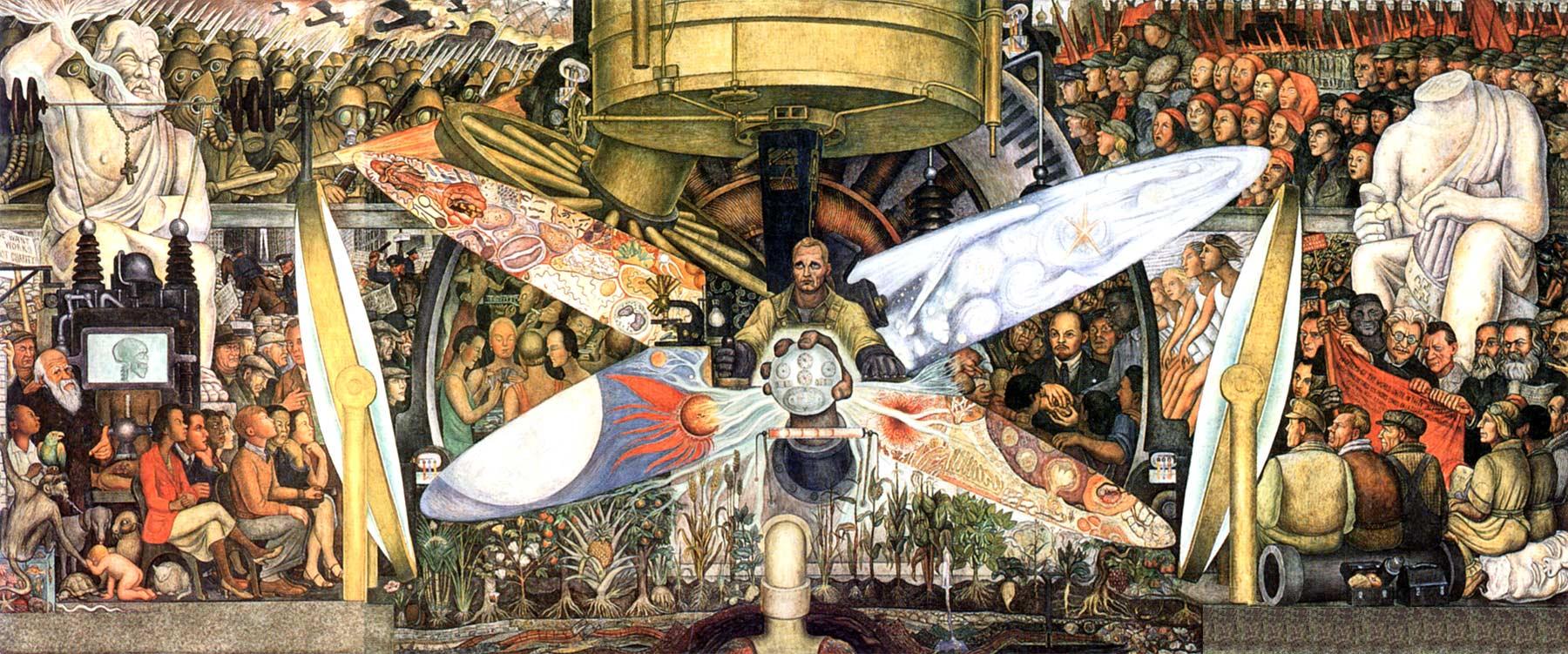
While they resided in New York, Diego and his wife Frida Kahlo were frequent guests at the Rockefeller home. Abby Rockefeller mothered a despondent Frida during a miscarriage. The commissioned Man at the Crossroads, the Rockefeller Center mural, was finalized while Rivera was in Detroit. From there he sent Mrs. Rockefeller a sketch and a letter in with he expressed “his respectful and affectionate compliments” and also assured her that he would try to do for Rockefeller Center, and especially “for you Madame, the best of all the work I have done up to this time.”

When Rivera started painting, the mural deviated from the approved sketch, and when he included a portrait of Lenin his employer protested. When Rivera refused to remove the portrait even though Frida Kahlo and others pleaded with him to do so, he was paid his entire agreed-upon fee and escorted off the premises. Eventually the mural was destroyed.

The loss of the Rockefeller Center mural left deep scars. Rivera was a very popular painter and at the time there were protests about his dismissal. It is said that Mrs. Rockefeller felt deeply betrayed by the man whose reputation she helped to establish.

Rivera recreated Man at the Crossroads in Mexico City. In addition to Lenin, the mural now sports a portrait of John D. Rockefeller, Jr., in which the life-long teetotaler clutches a cocktail.

MoMA’s current exhibition includes the rarely seen forty-five small watercolors from the painter’s Moscow sketchbook, which Mrs. Rockefeller gave to the museum along with the six-foot-long original sketch for the Rockefeller Center mural.

The MoMA show is worth a visit. The murals are on view until May 14th, 2012. Admission to the museum is free Fridays from 4-8 PM, but expect a line.

Suzanne Loebl is the author of America’s Medicis: The Rockefellers and Their Astonishing Cultural Legacy. (Harper Collins, 2010)

Posted in Uncategorized | Tagged , , , , , , , , , , | 1 Comment

Jobs, Jobs, Jobs.

During a 1968 interview at California Tech, Professor James Bonner, a plant biologist, foresaw that in the future there might be so little work that obtaining it would require a medical prescription. The other day I remembered this forecast, as I was self-checking out my purchases at CVS, a practice I had noticed at a Boston Shop & Save and at Walmart.

According to the US Bureau of Labor Statistics, the December jobless rate stood at 8.5%. Economists proffer various reasons, but few seem to discuss the changing labor needs of our society. For the past decades technology has been eliminating millions of occupations. It was in the 1970s or 1980s that gasoline filling stations encouraged customers to pump their own gas. About then I was exhilarated when a California or even French cash machine supplied me with money I had deposited into my New York bank account. This nor only reduced the need for bank clerks, but also money-exchangers. I bought my first computer in 1981, and it obviated the need for the typist to prepare a clean, hard copy to turn in to my publisher. Soon the clean computer copy was passé. From now on I would save my finished manuscripts onto a disk. This, in turn, required me to input all the changes made by the editor onto the copyedited manuscript. The post office has self-service counters; my lawyer’s secretary retired and instead of replacing her, he now types his own contracts. As he said, it is simpler to enter the changes on the computer himself. One used to get airline tickets from a travel agent or from the airline itself. Now there is an extra charge for not booking online or not printing one’s own boarding pass. The New York City subway had a fare booth—staffed by a clerk–at each of its many entrances. Now the booths are being dismantled and replaced by Metrocard selling machines. And what about telephone operators or receptionists? Talking to a human being was so much nicer than the endless: “Listen carefully because our menu has changed. If you want…press 1; if you want…press 2; if…”

I admit that many of these advances make my life easier, but what are we going to do with all the people that used to perform these now superfluous tasks? Jobs not only provide financial sustenance, but they also impart us with structure and a sense of worth.

My family belongs to the threatened middle class. My father died 41 years before my much younger mother did. He left her just enough money so that she never had to earn her keep. She was too proud to take a lowly job, and unfortunately had no training for a better one. The one exception to her somewhat boring existence was her annual stint at the post office, which at Christmastime employed temporary workers to help handle its extra mail. Sorting letters, I imagine, is quite dull. Still, to be with people and earn a bit of money gave my mom great satisfaction. Professor Bonner was right.

Posted in Uncategorized | Tagged , , , , , , , , , , , | 1 Comment

Discussing Birth Control a Century After Margaret Sanger

The current discussion about birth control brings to mind Margaret Sanger, who
a century ago fled her native land for Europe to avoid being put in jail for distributing birth control information via the U.S. Postal Service. Sanger spent the next two years in Europe gathering information on how women could try to regulate the number of children they wished to bear, and to choose the time when it was best to do so.

Sanger journeyed to Holland, where she studied the work of Dr. Aletta Jacobs, who in 1878 had founded her country’s first free clinic for poor women and children. Stillbirth and abortion dropped so dramatically in the vicinity of the clinic that the country followed Jacobs’ lead, and by 1914 the country had 50 such free maternal health clinics. The clinic’s female birth control method of choice was a rubber diaphragm, which eventually became the method of choice throughout the world.

Sanger returned to America and, together with her sister, opened the first free birth control clinic in Brownsville, Brooklyn. When the clinic—a forerunner of Planned Parenthood–was opened, there was a line of women halfway down the block who wished “to her to stop the babies from coming.” As expected, the authorities closed the clinic within ten days, and eventually Mrs. Sanger was hauled off to prison, where she spent her time organizing reading and writing classes among her fellow prisoners.

After she served her term, Sanger, with the help of some lawyers and physicians, managed to modify existing laws so that doctors could prescribe contraception to married women for a great variety of reasons. It would take decades before this resource would be available for teens or the unmarried.

The search for contraceptives is as old as humankind itself. Mechanical methods, like condoms made from goat bladders, pieces of wool jammed up the vagina, and vigorous rinsing after intercourse, offered some protection, but magic and swallowing poisons never worked, at least not for their intended purpose. Effective oral contraception dates from the 1950s and not surprisingly it was Margaret Sanger who recruited the scientists who finally cracked the problem and discovered “the Pill.”

There were two reasons that convinced Margaret Sanger, a nurse, to become a contraceptive crusader. As a child she observed that, as a rule, poverty and large families went hand in hand, and that rich women knew how to limit the children they bore and raised. The other reason was that as a nurse she had cared for numerous women who died from self-induced abortion. Quoting from Margaret Sanger’s autobiography:

Her last patient had been “a small slight Russian Jewess, about twenty-eight years old…Jake Sachs, a truck-driver scarcely older than his wife, had come home to find the three children crying and her unconscious from the effects of a self-induced abortion. He had called the nearest doctor, who in turn had sent for me…

The doctor and I settled ourselves to fight the septicemia…Never had I worked so fast, never so concentratedly…

After a fortnight…as I was preparing to leave the fragile patient to take up her difficult life once more, she finally voiced her fears. ‘Another baby will finish me, I suppose?’

‘It is too early to talk about that,’ I temporized.

But when the doctor came to make his last call, I drew him aside. ‘Mrs. Sachs is terribly worried about having another baby.’

‘She well might be,’ replied the doctor…’Any more such capers, young woman, and there’ll be no need to send for me.’

‘I know, doctor…but…what can I do to prevent it?’

…The doctor was a kindly man, and he had worked hard to save her…but he laughed good-naturedly and said…’Tell Jake to sleep on the roof.'”

Within a few months Mrs. Sachs was again pregnant and died of another self-inflicted abortion. Margaret Sanger never forgot what was to be her last case. “I went to bed, knowing that no matter what it might cost, I was finished with palliatives and superficial cures: I was resolved to seek out the root of evil, to do something to change the destiny of mothers whose mineries were as vast as the sky.”

-From Margaret Sanger, An Autobiography, as quoted in Conception, Contraception, A New Look by Suzanne Loebl, McGraw-Hill Book Company, 1974

It is surprising that the right for women to avail themselves of adequate methods of birth control is still being questioned today. Here in America, nobody is forced to use these methods if they interfere with their beliefs or desires. But I am deeply grateful that my sisters and I are able to have the number of children we want when we want them.

Posted in Uncategorized | Tagged , , , , , , , , | 3 Comments

The 58th Annual Winter Antiques Show

Credit: Library of Congress, Prints & Photographs Division, NY,31-NEYO,121-21

In my innocence I believed that armories, whose function is to keep soldiers in shape between wars, were frill-less, like gyms. This is not so in the case of the Park Avenue Armory, built for the prestigious Seventh Regiment of the National Guard, which opened in 1881. Louis Comfort Tiffany, Stanford White, the Herter Brothers, and other luminary designers of the day, created the reception rooms on the first floor. According to the New York City Landmarks Commission, today these comprise “the single most important collection of 19th-century interiors to survive intact in one building.”

I had the distinct pleasure of delivering a lecture based on my book, America’s Medicis: The Rockefellers and Their Astonishing Cultural Legacy, in the Armory’s magnificent Tiffany, or Veterans, Room. As always with Tiffany, the Victorian adage, “If much is good, more is better,” applies. Still, perhaps because of its ornate wood paneling, the room is surprisingly manly. The ceiling is magnificently and colorfully inlaid, the columns are covered in mosaics, and the enormous fireplaces surmount sports with turquoise tiles, topped with an unusual abstract mosaic. Instead of the customary flowers, the windows of this and the adjoining Silver Room feature a randomly geometric design of opalescent white glass rounds alternating with irregular pale green, yellow, and red rectangles. A magnificent Oriental rug covers the floor. So much for military asceticism!

For decades this Armory has housed New York’s Winter Antiques Show, run for the benefit of the East Side House Settlement. This year it honors the 60th anniversary of Historic Hudson Valley, founded by John D. Rockefeller, Jr. The fair, now in its 58th year, has a distinction of its own. Whether or not you are a collector, the show is a must for all those who love beautiful things. This year 75 dealers from all over America and Europe displayed an eclectic mix of objects they had been able to assemble for their clients’ delectation. The atmosphere is so upscale that it is hard to believe that they are actually selling their wares, displayed in the booths that look as if they were over-decorated rooms.

My lean wallet and I aimlessly spent two hours gawking at the displays. I had no use for the intricate telescope from J.P. Morgan’s private yacht, a playful carousel horse or a spectacular carpet woven for a Maharajah, but would not have minded picking up a Tiffany desk lamp. It would have fit right into my crowded apartment.

Posted in Uncategorized | Tagged , , , , , , , , , | Leave a comment

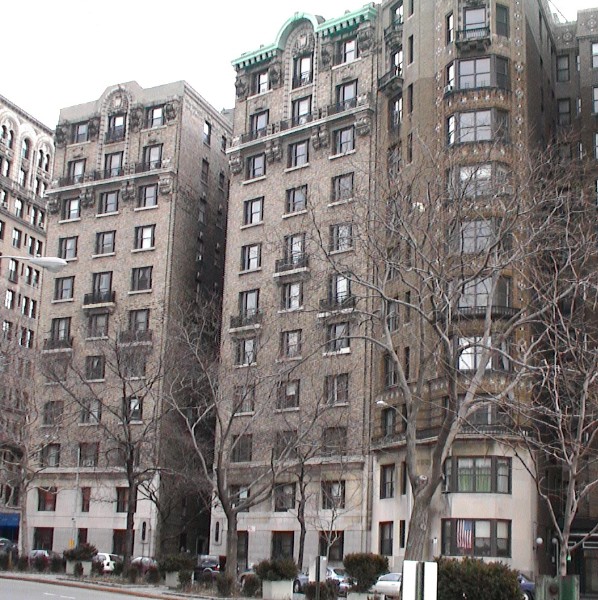
788 Riverside Drive

788 Riverside Drive

“To leave is to die—a bit.” This French proverb came to my mind the other day when C., my former Riverside Drive neighbor, called to congratulate me about a magazine article extolling America’s Medicis: The Rockefellers and Their Astonishing Cultural Legacy. My husband and I left 788 Riverside Drive seventeen years ago, yet I almost immediately asked C. about “my apartment.” “A nice young family lives there now,” he said, “and they pay about $5000 rent a month.” This is about 50 times what we paid for that very same space when we moved there in 1956. To us, our $102 rent seemed princely.

Even now I miss the apartment’s grand, 24 by 16 foot living room, the wood paneled dining room, the eighteen-foot ceilings, the old parquet floors, the wide hall and the enormous glass doors separating the various public rooms. 788 dates from 1911. Schwartz & Gross designed it for New York’s elite. Its long-forgotten name of Rhinecleff Court, the service bell embedded in the dining room floor, the butler’s pantry and the maid’s room all attest to its glorious past. I always wait for Christopher Gray, New York City’s historian, to feature this forgotten corner of New York in his NY Times column, Streetscapes.

When we moved into 788 I was about to give birth to my second child. The neighborhood was filled with young intellectual families resisting the siren call of the suburbs, where kids could play baseball and women could devote themselves to the care of their large families. Our friends included musicians, painters, teachers, dancers, writers, and university professors, and some of us even became quite prominent. We had a rich social life, though our purses were lean. We worried about the safety of the neighborhood and saw to it that our kids went to elite New York City public schools. The friendships we forged would last a lifetime. I shared this year’s Christmas dinner with four of the people I met then.

The 1950s marked the beginning of the women’s movement–Betty Friedan’s The Feminine Mystique would only be published in 1963–but my friends and I honed our skills or began building careers in spite of prevailing prejudice and obstacles. We organized our own homegrown nursery for three-year olds, and made other makeshift arrangements so that we had some free time to work. We cooked fancy French food for one another, dressed up for New Year’s Eve, and hung out in each other’s domiciles; our children profited from having multiple moms.

788 Riverside Drive is located on a rise above the Hudson, in one of Manhattan’s most dramatic and historic neighborhoods. The building fronts Riverside Drive and backs upon
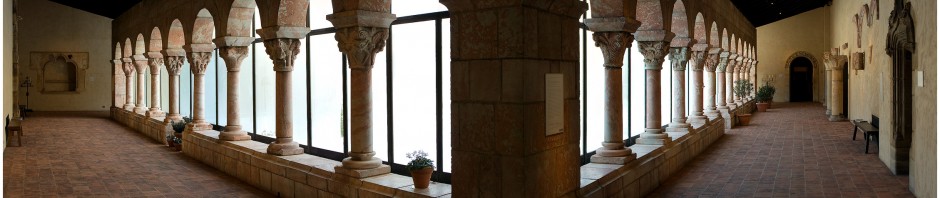
the Audubon Terrace adorned with sculptures by Anna Hyatt Huntington, the location of a series of small museums built during the first quarter of the twentieth century. When my children were small we spent many a rainy Sunday at the Museum of the American Indian, whose collection is now divided between the old customs house at the Battery in New York and the National Museum of the American Indian in Washington. Many of the museums, like my friends, eventually moved elsewhere. The Hispanic Society of America, with it incomparable collection of Spanish paintings and artifacts remains between 155th and 156th Streets in Manhattan, and is well worth a visit.

In 1994 my husband and I abandoned 788 and moved to Brooklyn Heights, another one of New York’s historical neighborhoods. It too was hard hit during the Great Depression when many of its single-family homes became single room occupancies. Because of its proximity to Wall Street, it recovered much earlier than lower Washington Heights. My current apartment house dates from 1925. It is about half the size of the one I left and is filled with young families. Every year we welcome one or two new babies. In the morning nannies come and the moms goes off to work. Fresh Direct and various restaurants deliver food. Dads seem almost as harangued as their wives. Starting with kindergarten, everyone is worried about getting their kids into the right schools, and of meeting the escalating management fees. It all has an aspect of déjà vu, except that now I am a spectator rather than a participant.

Still I am content that I am able to continue living in “overpriced” New York City. From my “new” apartment I can almost glimpse New York’s newest playground, The Brooklyn
Bridge Park, and the Statue of Liberty, which celebrated its 125th birthday months ago. She valiantly holds onto her flickering torch, trying, not always successfully, to remain a
beacon of freedom in a darkening world.

Posted in Uncategorized | Tagged , , , , , , , , , , , , , , | 5 Comments

The Child in Me…

…insisted that on the last day of 2011 I go to Fifth Avenue to share the city’s unabashed holiday spirit. Sidewalks in Midtown were unbelievably crowded with people from all over the world: Spain, France, Germany, Asia, and South America as well as the other 49 states of the Union. This time of year, New York is a travel destination, and I hope that sales figures will bear out the influx.

Even in these difficult economic times Fifth Avenue rolled out the red carpet. Regretfully I could not start at the erstwhile B. Altman, located in one of the city’s most spectacular merchandising palaces, which fortunately metamorphosed into the Business branch of the New York Public Library. Lord and Taylor, however, fulfilled my expectations. The store asked children to draw pictures of what they thought “Christmas Was Made Of” and used the drawings as inspiration. L & T always pays homage to old New York and children frolicking in snowy Central Park was my favorite scene. The mechanical marvels included numerous Christmas trees, a mother baking cookies, Santa and his reindeer flying overhead, children unwrapping presents, and dogs eating cookies.

Inching uptown, I passed New York’s Public Library, where children sat astride its famous lions. The Rockefeller Center Promenade was so crowded that I only glimpsed its enormous Christmas tree from afar. Saks Fifth Avenue windows showcased specially designed clothes next to white architectural fantasies. Cartier, the jeweler, had wrapped up its entire small buildings as if it were a giant gift box. The crowds had thinned a bit by the time I reached the always-magical small 3 by 4 ½ foot Tiffany windows, which this holiday featured carousel animals set in a winter landscape. A tiny merry-go-round whirled in one window.  In another carousel animals scampered over a bridge, illuminated by a lamppost ringed with a diamond necklace. In a third, a giant ring occupied the saddle of a lonely white unicorn, while a small bird perched on another ring.

Across Fifth Avenue, Bergdorf-Goodman’s Carnival of the Animals was worth the hike. Whereas Tiffany adheres to minimalism, B&G stresses bounty: extravagant gowns, baubles, stunningly crafted fantasy creatures, antique cameras, Judith Lieber handbags, embroidery, sequins, mosaics, silk and satin. In one window formally dressed white stags attended three bird-headed creatures dressed in dreamy white gowns; in another a zebra greeted a woman in a black lace dress; a third depicted an underwater scene in which a mermaid-like woman floated amidst sea creatures.

Time to leave, my feet hurt. Gratefully I climbed aboard on a crosstown bus that drove me to the more down-to-earth Columbus Circle. I was content. Christmas in New York is a communal affair. Where else could I have experienced such an extraordinary spectacle for free?

Posted in Uncategorized | Tagged , , , , , , , , , , , , , | Leave a comment

To Have and Have Not: A Visit to New York’s Neue Galerie

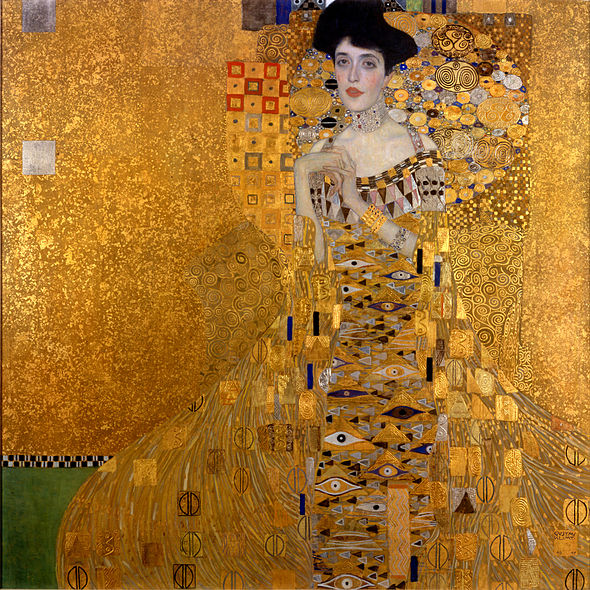
A German proverb: “Money is dirty, but one has to have it,” came to my mind as I went to see Ronald Lauder’s collection at his museum on Fifth Avenue. As always, the beauty of Beaux Arts mansion that shelters the Neue Galerie is bewitching. Carrere and Hastings, architects of the New York Public Library and the Frick, built the mansion in 1904 for another tycoon. I am thrilled by the diamond pattern of the black and beige marble floors, the curving stairs and their wrought iron banisters, the elegant chandeliers,  and the restrained use of a single orchid plant.

To my surprise, I had to pass through a newly installed metal detector at the door, its presence no doubt prompted by the New York Times front page article about Ronald Lauder’s finances.

Acquisitiveness and collecting are widespread human traits and, given that my artistic sensitivities run very close to those of Ronald Lauder, I would have loved to buy what he did. Even though I had actually seen few of the art pieces on view, they felt like old friends. Dozens of small works by Paul Klee, George Grosz, Kandinsky, Otto Dix, and other German Expressionists fill the gallery on the landing of the third floor. This art movement emerged at the beginning of the bloody 20th century and I have always identified with its pain and rawness. An assemblage of Constantin Brancusi’s sleek minimalist sculptures sitting on a platform share the West Gallery with a wall full of Picassos, many dating back to the beginning of his career.

As always, the elegant Adele Bauer Bloch reigns on the second floor. The West Gallery, fronting Central Park, overflows with lavishly ornamented medieval armor as well as number of spectacular Cezanne oils. Here and elsewhere in the mansion, glass vitrines are filled with a mélange of high-end objects—tchatkes if they weren’t art. They include exquisite Limoges enamels, reliquaries, ivory chess figures, and oodles of silver craft objects, produced by the Wiener Werkstaette.

To complete my vacation from everyday concerns, I repair to the Viennese Café Sabarsky, located on the first floor of the mansion, and order a double Einspanner—espresso served in a glass cup filled with whipped cream—and a slice of Klimt Torte—a nine-layer chocolate cake. I sip my coffee, my eyes lazily scanning my hometown’s beloved Central Park, created in 1880 to provide a country-like experience to its underprivileged masses.  I think of Serge Sabarsky, the defunct co-founder of Lauder’s museum. He, like me, was a victim of Nazi persecution. He opened a gallery on Madison Avenue, where both Ronald Lauder and I could immerse ourselves in German and Austrian Expressionism. It is here that Lauder started on his shopping spree, while I just as happily collected the beautiful postcards that announced the gallery’s shows.

I emerge on 86th Street, grateful for the oasis created by 0.001 percent of the population. On the crosstown bus I read about the latest unemployment figures, the foreclosed houses, the Occupy Wall Street movement, and I sigh.

Posted in Uncategorized | Tagged , , , , , , , , , , , | 1 Comment

A Journey to America’s Newest Art Museum: Crystal Bridges

For most of us, glory comes in small packages. So it was with immense pleasure that I journeyed to the Crystal Bridges Museum of American Art to deliver a talk entitled America’s Medicis: The Rockefellers and Their Astonishing Cultural Legacy. Alice Walton, whose father Sam created Walmart in tiny Bentonville, Arkansas, founded the museum in her hometown.

Alice Walton became fascinated by art as a teen, and the idea of founding a museum must have been germinating in her mind for decades. Crystal Bridges opened its doors on 11/11/11. For a new institution it is very polished, so much so that it seems as if it emerged from the head of its foundation as the Greek goddess Athena sprang from the head of Zeus, her father.

The museum itself consists of a series of connected pavilions partially emerging from the dammed up waters of the Crystal Creek, which runs through the property. Natural light filters through intricately constructed roofs consisting of alternating strips of copper and glass. Small “meditation” rooms, from which visitors can glimpse the tastefully manicured landscape, enhance the experience.

Given the appetite of collectors and institutions for any art that is not securely nailed down, the comprehensiveness of the Crystal Bridges collection is amazing. From time to time this visitor encountered old friends like Asher Durand’s Kindred Spirits, whose acquisition caused heartache and ruckus, but on the whole I discovered wonderful pictures by both familiar and unfamiliar artists. I was moved by the six portraits and double portraits of the Levy-Frank family by Gerardus Duyckinck I from around 1735, smiled at Norman Rockwell’s iconic Rosie the Riveter and was astounded by Winter Scene in Brooklyn, which was painted in 1820 by Francis Guy, and is located around the corner from where I live now.  The collection is a tribute to Alice Walton’s very personal taste.

Mine was the first lecture given in the museum’s stunning lecture hall. There were some minor glitches, but all parties involved—the audience, the staff, and the lecturer—were pleased with the outcome.

From the moment I landed at the relatively new Northwest Arkansas Regional Airport I was surrounded by friendliness. Everyone I dealt with—at the hotel, restaurants, the museum, and even Walmart’s small visitor center, which harbors Sam Walton’s beloved red Ford truck and his wife’s wedding gown—was less stressed than their counterparts back home in New York.

Ms. Walton hopes that Crystal Bridges will turn Bentonville into an art magnet a la Bilbao. The museum itself—so different from either Frank Gehry’s free-form sculpture in Spain or the more old-fashioned “Temple on the Hill”—is certainly dramatic enough.

For the time being, tickets to the free museum are “sold out.” Time will tell whether its popularity will hold up. It may very well. As I was preparing to leave Bentonville, a couple greeted me in the hotel breakfast room, and told me that they had attended my lecture. I asked them where they lived. “Virginia,” they answered. “When we heard that something that great was in our vicinity, we came right down.”

Posted in Uncategorized | Tagged , , , , , , , , , , | Leave a comment

On Public Speaking

For as long as I can remember, I’ve been afraid of speaking in public. Since I love telling stories, my fear may have been one of the reasons for me becoming a writer.

Once upon a time it was enough to write a good book, paint a nice picture or contribute to the world’s scientific knowledge. No more. Now everyone has to be a showman of sorts.

I always hated public speaking—but now that I am a book author it has become part and parcel of my existence. As a matter of fact, to a certain extent, I have learned to enjoy it—and I have gotten to be good at it most of the time. Few of my listeners fall asleep and there always are a decent number of questions. Lately I even manage not to kill my own jokes. Last week, when I spoke about America’s Medicis: The Rockefellers and their Astonishing Cultural Legacy in Northeast Harbor, Maine, I was relaxed enough and patiently waited for the laughs. But speaking is not enough. Today’s audiences are used to illustrations, which means that one has to master Power Point, Photoshop and other fancy programs.

One of my handicaps is the accent that I have been trying to shed for years. It seems to entitle anyone to whom I speak to ask me where I hail from. Since I moved to Brooklyn, NY some ten years ago, I have finally reconciled myself to the fact that I will always have an accent. When I first arrived in America I attended an English for Foreigners class at Columbia University. During the first class we introduced ourselves and identified our mother tongue. Most of us came from Belgium, Turkey, India, Thailand and Japan. One guy, however, got up and asked: “I was born in Brooklyn and hope to die in Brooklyn, so why, Professor, was I sent to this class?”

Twenty years later I decided to give my accent another try and registered for speech class at New York University. The professor again had us recite our CV. Believe it or not, one of my classmates got up and said: “I was born in Brooklyn, and so were my Mom and Dad, yet everyone asks me where I was born.”

“Well,” the professor answered, “here in the U.S. we consider Brooklyn a foreign country.”

Posted in Uncategorized | Tagged , , | Leave a comment

The Wish Ring

Once upon a time I wrote an illustrated children’s book called The Wish Ring. It is the story of Hans, who finds a magic ring with a single wish. A wily goldsmith manages to substitute an ordinary ring for Hans’ magic one. Upon his return to his miserable farm, Hans plans to use his wish to buy additional land, a cow, sheep, a barn, a horse, etc, but instead of using his wish he works extra hard, and so he never discovers the evil deed of the now defunct goldsmith. The latter had wished for a ton of gold, which instantly rained down from his ceiling and crushed him to death.

I am not a political writer, but I cannot understand the stance of many of those who represent us in Washington. I cannot imagine that all our super-rich believe that they need all the money they have. Our country is in economic trouble. I am sure that there is waste, big programs need restructuring, and some can be axed, but by and large we need the major entitlements, we must educate our children better than we do, we do need an army, an efficient anti-terrorist protection, and a ton of other things. So we do need more revenue. What is so terrible about raising taxes? Nobody—I included—likes paying more taxes, but I want this country to continue being strong, healthy, free and compassionate, and that takes a lot of money.

Posted in Uncategorized | Tagged , , , | 1 Comment