
Letter to My Son

The Mothers' Group

David, it is your birthday. If you had not died of HIV/AIDS I would have prepared to visit you in San Francisco or elsewhere, organized a party, and baked you a Linzer Torte or a Sacher Torte chocolate cake. You were such a birthday junkie. I have your pocket calendar and in it you marked the birthdays of your pals with different size red hearts. I smile when I see that February 19th, yours, has the biggest heart of them all.

It took awhile for your expectations to equal the actuality of your birthday party. You were often disappointed, even incensed at the gifts your friends brought. You were not an easy child and your requirements of others were exacting, but we always were best friends, though I too had to toe the line. During those early children’s birthday parties you insisted that I wear that garish red velvet dress that I had bought at Klein’s department store for ten dollars.

I was sort of awake when you were born. I complained as the obstetrician was sewing up my episiotomy. “Look at your son,” he said. There you were lying next to me, tiny, extremely pale, waving your hands. The doctor was right; you already were a comfort then and I forgot my pain.

You always tried to take care of me. Therese, your paternal grandma, lived with us for a number of years. She died when you were three years old, and you could not understand the fact that she had “vanished.” You became very frightened when I left a room without telling you. Soon thereafter, Judy (our daughter) got the measles and I caught the mumps. I had to rest. Dad took you to stay with Omi, your other beloved grandma, where you usually loved staying. You insisted on coming home, even though you were told that I had to stay in bed and could not care for you. During the next week you sat at the bottom of my bed, watching over me and amusing yourself.

When you were about six, I took a science writing class at the New School in New York. At its conclusion, we met for a party at our house. Dad was not home and Judy was sleeping, but you were my enthusiastic co-host, offering hors d’oeuvres and filling glasses. I was so proud and grateful having you.

When you were 34, the two of us spent a week in Paris, going to museums, eating in fancy restaurants, or just walking around the French capital. The HIV virus already undermined your strength, or so I thought, because you insisted on an afternoon nap. Only later did I discover in your diary that at night, after I retired, you went out enjoying Paris’s gay world.

I will be forever grateful that you did not develop full-blown AIDS and died quickly from pneumocystis pneumonia. I promised you that I would be alright even if you would be gone. I am, though I miss you terribly.
Posted in family stories | Tagged , , , , , , , | 5 Comments

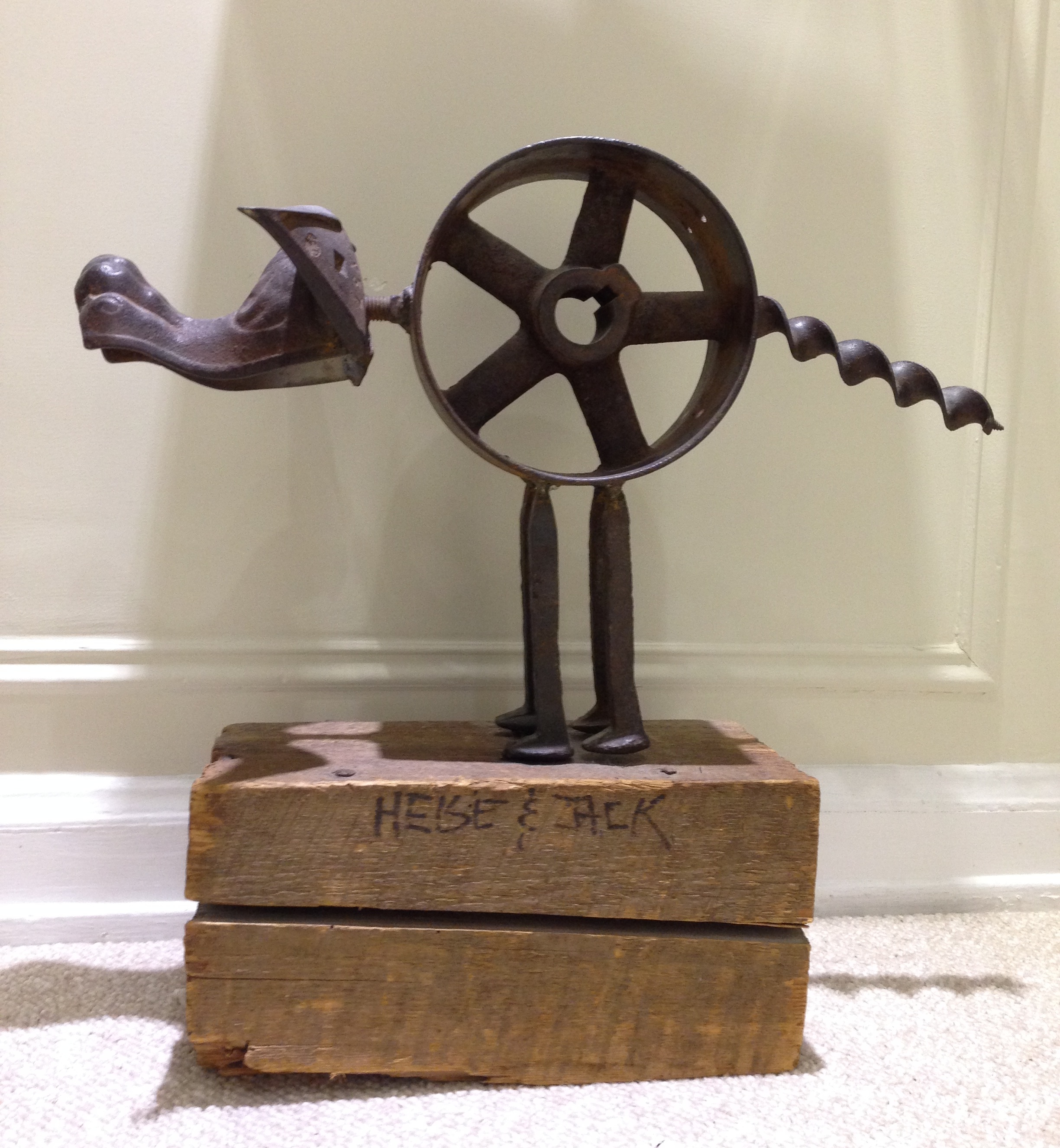
In 1970 or so my husband and I went to B. Altman, the venerable Fifth Avenue department store, to view remarkably inexpensive sculptures assembled from old farm implements designed by William Heise, a sculptor from Vermont. It was rather early on a Saturday morning and the only other visitor, a middle-aged man, was so familiar-looking that I said hello. “Charming, aren’t they?” he answered. Indeed the birds, pigs, moose and other creatures assembled from shovels, bathtub legs, scythes, and the like were so wonderful that we selected three. When we got to the sales desk, it turned out that our fellow-shopper, Governor Nelson A. Rockefeller, had already acquired two of our selections. All in all he had bought 21 sculptures.

Sculpture by William Heise and early collaborator Zack, bought at B. Altman.

Sculpture by William Heise and early collaborator Zack, bought at B. Altman.

Nelson Rockefeller, like his mother Abby, was both an art collector and a shopaholic. At his death in 1978, he owned 3000 works of art, ranging from folk art, like the B. Altman found-object works, to masterpieces by Matisse and Picasso. This number does not include the thousands of works Nelson had traded in or donated to the many museums he founded or endowed.

My encounter at Altman contributed to my interest in the art-loving family. Forty years later I decided to write a book entitled America’s Medicis: The Rockefellers and Their Astonishing Cultural Legacy (Harper, 2010) that recounts their involvement with more than thirty museums. This year we celebrate the sixtieth anniversary of the Museum of Primitive Art that Nelson Rockefeller founded in 1954. For twenty years it was located in a house the family owned on 54th Street across the street from MoMA.

Nelson was not the only one to recognize the power and beauty of African masks or Mexican figures, but he was the first to officially brand it as art. Until he came along, such objects were exhibited at museums of natural history. From the first, Nelson’s tribal art collections overflowed its quarters, and the small museum mounted specialized shows such as Sculptures from the Pacific, Benin Bronzes, The Incas of Peru and African Sculptures from the Museum Collection.

Nelson Rockefeller’s son Michael decided to follow in his father’s footsteps. He perished off the coast of New Guinea while collecting Asmat artifacts for the Museum of Primitive Art. In his memory Governor Rockefeller, encouraged by Brooke Astor, offered the entire collection of his small museum to the Metropolitan Museum of Art provided they would erect an entire wing named for his son. After a hiatus of twenty years the Michael C. Rockefeller Wing housing the Arts of Africa, Oceania and the Americas, opened in a spectacular space at the southern end of the museum complex. Its content offers a spectacular display of the tribal art from these regions. The art created by North American tribes is somewhat neglected because Rockefeller felt it was well represented in other U.S. museums.

Nelson Rockefeller’s four-term governorship left a mixed legacy and being president of the U.S was his unfulfilled ambition. His positive impact on the art world, both as governor and private citizen is unquestionable. He believed that the enjoyment and healing power of art was everyone’s indelible right. As governor he created the country’s first Endowment for the Arts, which served as a model for the national version. The Micheal C. Rockefeller Wing was only one of his legacies. This year the museum is celebrating the 60th anniversary of the Museum of Primitive Art. For the occasion the museum culled fifty masterpieces from the 3,000 items gifted by Rockefeller and exhibited them in a special alcove within the Michael C. Rockefeller Wing.

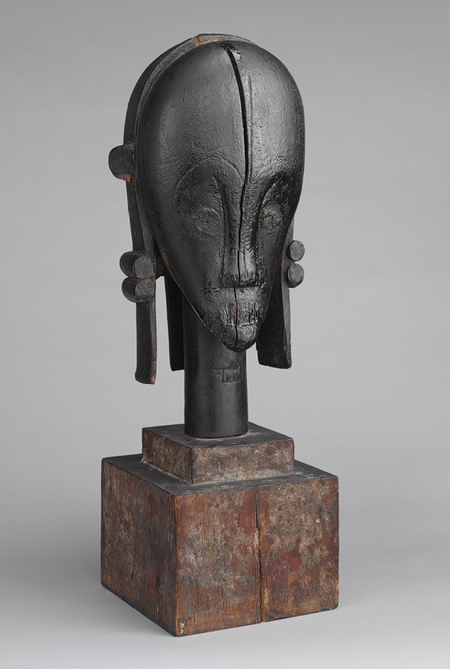
Fang Reliquary Guardian Head

My very favorite among these is a black wood Reliquary Guardian Head made by the Fang people living in Equatorial Guinea. The head consists of a triangular oval, with a large rounded forehead, scantly sculpted eyes, nose, chin and elongated earrings. Its simplicity and dignity might have inspired Brancusi. The reliquary, however, it is only one of the many beautiful objects sequestered in this section of the museum that, until Nelson Rockefeller came along, concentrated on more traditional art objects.

Posted on by Suzanne Loebl | Leave a comment

A New York City Snowstorm: Pleasure and Climate Change

Image

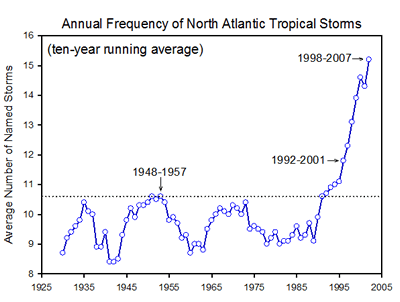
Graph from the Center for Climate and Energy Solutions

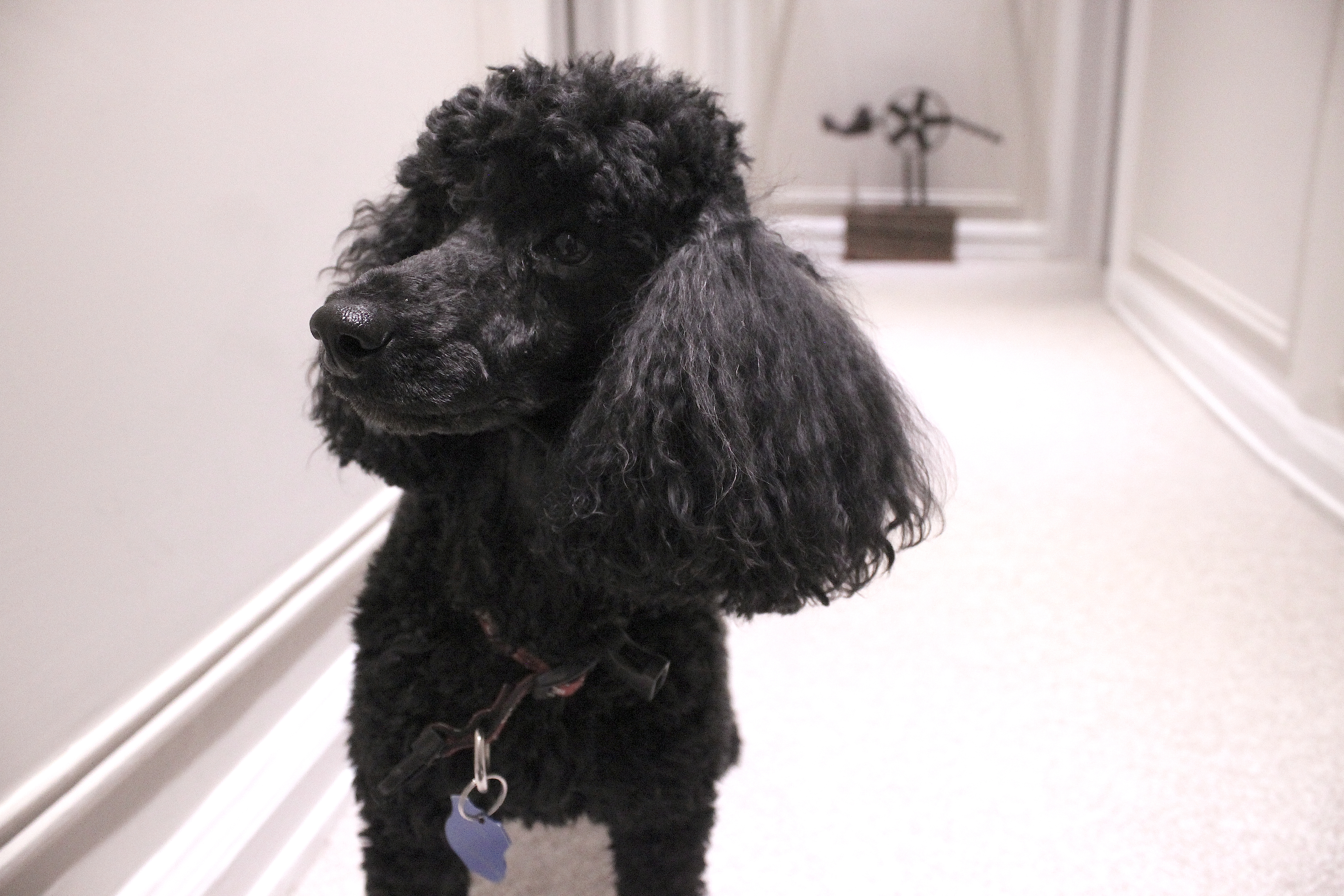
On January 2, 2014, at about 10 PM, I took Viva, my new miniature poodle, for her evening walk. Nobody else was about. The street, the lampposts, the houses and even the uncollected garbage were frosted by the season’s first snow. Viva enthusiastically hopped into the fresh rapidly accumulating piles. She is a four-year old rescue from Brazil and may never have experienced snow. I too enjoyed leaving my footprints in the virgin cover. The dog and I made our way to the Brooklyn Promenade and admired Manhattan, whose lights dimly diffused through the mist.  On our way back we encountered a snowplow, out to demonstrate that our brand new Mayor de Blasio is as efficient as his predecessor in keeping the streets open.

As a child I loved sledding, building snowmen and enjoyed a good snowball fight. I hated the adults’ denigrating remarks and complaints about the snow, and swore to myself that I was never going to join the ranks of these spoilsports. So far I have kept my word. To me snowstorms demonstrated that nature still could overrule humanity’s mastery of its environment.

New York becomes very human when it is snow bound. We all celebrate the unexpected holidays. Skiers fill Central and Prospect Parks. Emergencies bond people. Neighbors offer to shop for neighbors. I remember a 1950s snowstorm when my husband and I were the only customers dining in the glassed-in veranda of a 72nd Street restaurant, feeling as if we were on a far-away vacation. City streets become deserted, shops and museums are empty and there are seats for sold-out Broadway shows. The beauty of city snow does not last. All too soon it turns into blackened mush or slippery ice and the uncollected garbage becomes an eyesore.

Unfortunately I may have to join the adult world. Nature finally has had enough of man’s interference. Our garbage and carbon emissions are poisoning the atmosphere and unusual weather is becoming the norm.  Facts recorded by many agencies, including The Center for Ocean Solutions, demonstrate that the intensity of typhoons and hurricanes is increasing exponentially (Sandy along the Atlantic coast, Haiyan in the Philippines). Overflowing rivers and torrential rains cause disastrous flooding (North Dakota and Nashville). In spite of all the available concrete evidence, politicians as well as many of the world’s people ignore these warnings. So let us temper our enjoyments of nature’s bounty with a reasonable approach to climate change. Let us reduce our personal consumption of gasoline and other pollutants and, even more important, let us elect politicians that support climate control. It is a serious matter.

Posted in politics | Tagged , , , , , , , , , , , , , , , | 1 Comment

Kandinsky and His Kaleidoscope of Colors

One of the pictures that decorated my bedroom way back in Hanover, Germany, was a concentric blue and black circle accompanied by triangles, squares, and straight and wiggly lines that look like the mast of a sailboat. Much later I learned that it was a lithograph by Kandinsky, part of his Kleine Welten (Small World) series dating from 1923. My mother must have picked the image up for a song. It was with much pleasure that I went to view the current exhibition at the Neue Galerie in New York entitled Vasily Kandinsky: From Blaue Reiter to the Bauhaus, 1910–1925. During the fifteen years covered by the show Kandinsky’s work evolved from representational to purely abstract or, as he described it, nonobjective.

Born in Tsarist Russia, Kandinsky became a lawyer to please his father. Eventually he switched to art. He moved to Munich to study some more and to join contemporary German artists who were forging German Expressionism. Kandinsky’s legal studies, as well as his musical training, may have inclined him to be more theoretical than most artists. He believed that all arts—music, painting, and language—represented a continuum. Borrowing musical terminology, Kandinsky viewed his creations as “compositions” and “improvisations,” the former being carefully composed paintings consisting of harmoniously assembled geometric forms, whereas the “improvisations” included spontaneously painted abstract shapes.

Image

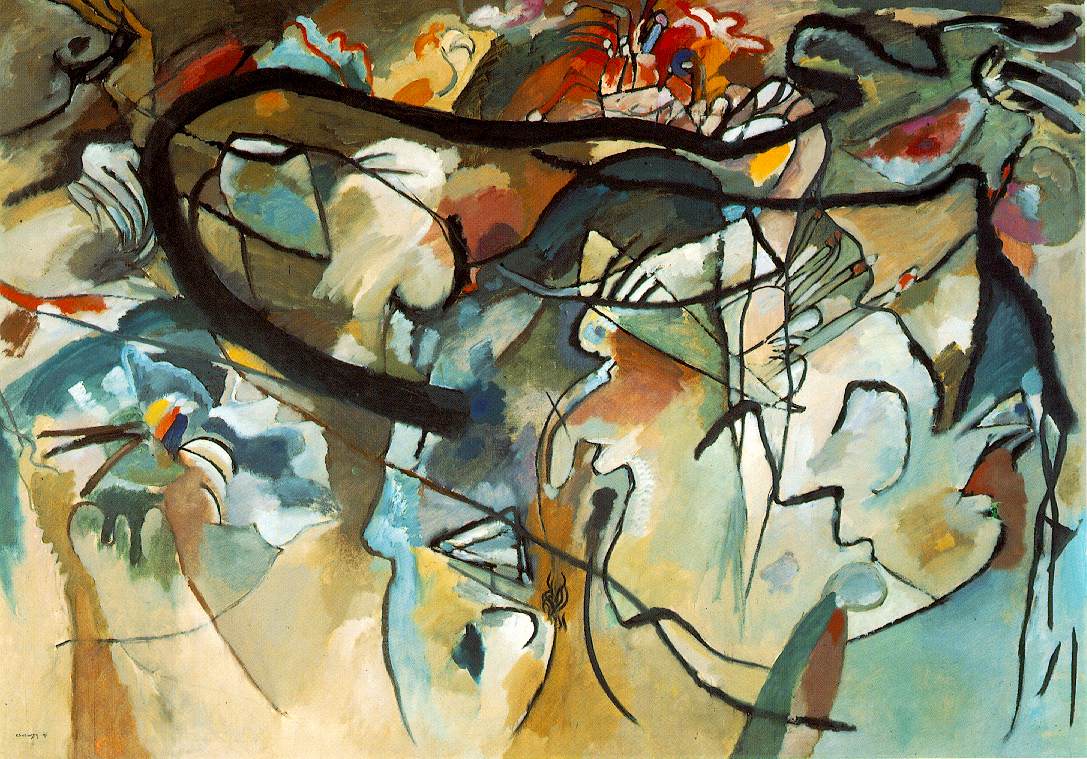
Kandisnky’s early works at the Neue Galerie are still representational. Street Scene in Murnau is rendered in brilliant primary colors that link it to the work of his colleagues in the Blue Rider group (1911–1914,) of which he was a founding member. Franz Marc’s Great Blue Horses, from the Walker Art Center, also in the show, illustrates this relationship. Viewing this magic painting alone makes a trip to the Neue Galerie almost mandatory. In these works both Marc and Kandinsky use a brilliant royal blue—traditionally the color of the Virgin’s robe—that imbues their works with spirituality. Gradually Kandinsky’s canvases became totally nonobjective. Composition Number V, a large canvas, is one example of this complete transformation.

 Image

Kandinsky’s participation in the famous 1913 Armory Show, which celebrates its centennial this year, earned him an American following. The Neue Galerie show includes the four harmonious panels he painted for the Park Avenue dining room of Edwin R. Campbell, the founder of General Motors.

Kandinsky involuntarily returned to Russia during and after World War I. There, and after his return to Germany, his style became geometric. A portfolio of twelve lithographs, closely related to mine, is part of the exhibition, as is Black Form, 1923. The latter features an expanding green circle with geometric forms spilling across a large canvas. The carefully tinted shapes illustrate Kandinsky’s sense of color and design.

Upon his return from Russia Kandinsky joined the staff of the Bauhaus, whose philosophy of all-inclusive art suited him to perfection. He closely related to Paul Klee, to whose minimalist, often nonobjective art he related. Kandinsky stayed at the Bauhaus until the Nazis closed it in 1933. The Nazis considered his work degenerate and destroyed important canvases.

Within a mile of the Neue Galerie, the Jewish Museum has mounted a Chagall exhibition, featuring that painter’s work during World War II. Though Kandinsky and Chagall came from vastly different strata of Russian society, their lives were rather parallel and they considered themselves competitors. Kandinsky departed Russia in 1895, Chagall in 1910. Because they were Russian citizens both were forced to stay or return to Russia during WW I, where they survived and painted during the early years of the Soviet regime. After that war Chagall returned to France and Kandinsky to Germany. Chagall fled to the US during WW I returned to France in 1947. Both artists lived out their lives in France and in retrospect had done their most memorable work prior to the Second World War.

Posted in Uncategorized | Tagged , , , , , , , , , , , , , , , , , | Leave a comment

Aladdin’s Cave

If you love jewelry—and many of us do—hurry to the Metropolitan Museum and visit Jewels by JAR. For a short hour you’ll escape the real and virtual miseries of the world and reside in a wonderland of colors, glitter, larger-than-life butterflies, microscopic carrots, raspberries, rams, and rabbits.

I am a jewelry hound in love with the master goldsmiths of the past, with Tiffany, Fabergé, Lalique, and Cartier, as well as with the less famous practitioners who supplied me with my own beloved baubles. Yet until now the name of Joel A. Rosenthal (JAR) had passed me by. He was born in the Bronx seventy years ago, went to the High School of Music and Art, followed by Harvard, and ended up in Paris. One of his early jobs was designing petit point slippers for Hermès. When JAR turned to jewelry, he created miniature mosaics (pavé is the technical term) from diamonds, rubies, and other precious and semiprecious stones. Sometimes he wound single strands of his jeweled threads around the surface of large beads or used them to frame the edges of fan-like pieces of mother of pearl.

Many of JAR’s pieces are large, and I was imagining the aplomb of the women who dared wearing them. Not all of his raw materials are precious. A brooch of long red coral spines resembles an angry sea urchin. A huge red tulip evokes Tiffany’s famous diamond and sapphire iris, now owned by the Walters Art Museum in Baltimore. But most of the jewels—that word is derived from the French one for toy: jouet—are reminiscent of Fabergé’s intricate confections.

JAR

I loved the delicately tinted flowers, the flight of thirty butterfly brooches, and the two elephants, one very natural with agate tusks and a tiara of diamonds, the other covered with a blanket of pearls and jewels. Pearls also made up the tousled bangs of a disgruntled sheep’s head. All the pieces are one of a kind, often specifically made for well-endowed clients. I wonder who owned the giant black feather-and-diamond earrings the jeweler must have designed with Tchaikovsky’s Black Swan in mind, or the asparagus tip brooches displayed in the cabinet of food-based jewels?

When it is time to leave the show’s enchanted atmosphere and return to the here and now, visitors exit through the gift shop, which sells a two-volume set of books with lovely images of the four hundred pieces of jewelry from the entire exhibition. At $200 per volume I opted out, but promised myself to return before the show closes in March 2014.

Posted in Art review | Tagged , , , , , , , , , , , , , | Leave a comment

Viva

My apologies for having neglected my Branching: Thoughts of an Ever Curious Author readership during the past five months. There were many good and bad reasons: reconstruction of my Brooklyn apartment, a new book idea that did not yet gel, a computer crash, and Viva, a four-year-old black miniature poodle that joined our household. I am way past my childbearing years and try to enrich my life with pale approximations of the empowerment provided by a two-year-old greeting Mom’s return. A little animal provides a good approximation.

A few lucky accidents resulted in our getting Viva. She was born in a large kennel in Brazil on October 4, 2009. She became a show dog and won numerous prizes in South America and in the US. After she retired, her kind owner looked for a loving “pet—as in foster—home.” Viva joined my husband and me in Maine.

Photo by Sean Gordon-Loebl

Photo by Sean Gordon-Loebl

Viva is tall, with long, thin legs. Instead of walking, she struts like a miniature parade horse. Her poise is perfect. Her demeanor is regal. When she arrived she did not let us know how bewildered she must have felt, except for being terrified by sudden noises. She did not even recognize her own name: Genevia, which we surely pronounced differently from the way her Portuguese-speaking handlers had. Show dogs are taught to never, ever pee or poop when on a leash. Obviously though, we had to leash her, and after a 24-hour dry spell, in desperation she let go among the splendor of the Maine woods.

We called her Viva, we hired a trainer, and within a week she knew her name. She also discovered the advantages of being a pet rather than a working girl. There was no question in her mind that our bed was hers. She went through a delayed puppyhood, chewing off medicine bottle caps, watchbands, and zipper pulls. She loved emptying wastepaper baskets. Most of all she soaked up our growing love, becoming desolate when we left her alone and literally jumping two feet in the air when we returned. She became my virtual shadow, and the best parts of our days were the long walks we took on Acadia National Park’s carriage roads.

Four months later we left for New York and poor Viva had to learn to pee on concrete! Fortunately she loves the city: the intoxicating smell of other dogs, the dogs themselves, and their owners. And even though her nose is constantly down exploring what, where, and when other dogs peed, her beauty elicits comments. My husband and I feel immensely cherished by Viva. Her devotion boosted our self-esteem, her pranks make us laugh, and her youth as well as her needs makes us feel young. I even lost five pounds walking her!

Posted in Uncategorized | Tagged , , , , , , , , , , , , , , , , , , | 1 Comment

Early Childhood Education, Dollars, and Sense

I am delighted that the folks in Washington are thinking of educating very young children. I anticipate pilot programs, multi-million dollar projects, and oodles of red tape, followed by reports on hard-to-quantify improvements. Do we really need all that to teach tots to have a bigger vocabulary and enjoy music, art, flowers, and all of the rest of the wonderful world that surrounds them and us? What about informal homeschooling programs for toddlers?

More than half a century ago, even before Betty Friedan published The Feminine Mystique, my friends and I decided to form a playgroup. Each morning, a different mother hosted our three-year-olds for a few hours in her home, consisting in this case of large, old-fashioned apartments in a had-been upscale New York City neighborhood. Each mother had her specialty—one mom was a trained kindergarten teacher, another a professional dancer, and I was a budding writer. However, we did not actually need these skills to provide the group with interesting activities.

Though there were no official evaluation forms, our “school” was a success. The children formed loyal, sometimes lifelong friendships, did well when they entered public school and all became successful professionals. It was hard work, and at times it was difficult for my son to share his mom and his toys with four other children.

Our motives in forming our playgroup had been a bit selfish. We all had professional ambitions, and we did like to have four mornings a week with uninterrupted time. For us, the school represented a bridge to a post-intense-motherhood career. The playgroup also provided me with lifelong friends. This Saturday I am taking Doris, the kindergarten teacher, out for her birthday lunch.

A playgroup is not the only way to enrich childhood. Young children do not have to be taught by professionally-trained adults. Child-loving adults have always transmitted vocabulary and life-skills to the next generation. Grandparents are prime candidates. They often have more patience and free time than their own harassed, hardworking children.

It is very easy to come up with suitable activities for small children that both teach and educate. You may come up with your own activities. It is important to have a regular plan. Baking teaches arithmetic (3 eggs, 4 tablespoons of sugar or 8 teaspoons…how many cookies does each member of the family get, if you have a total of 13 cookies?); making cards to celebrate our endless holidays teaches lettering and painting; and telling them a story or having them tell one fires the imagination.

But books are best. Most of us remember one or more picture books that filled us with joy eons ago. These and others can be found at your library, which also has storytelling hours.

And, you don’t have to leave your house to get free books. It is of great interest that today, when the death knell seems to have sounded for print books, the Internet helps us obtain free print books. A rapid search of the Internet reveals sources for free books for all ages.

E-books and digital books on the Internet are easy to obtain. There are dozens of sites that let you download e-books or interact with them on your computer. Here are a few suggestions, classified according to type:

Downloadable e-books, and downloadable other file formats

Website Books – for reading and interacting on the web

App Books – for iPhone, iPad, and other tablet devices

Free Book Mailing Services

  • Governor’s Books from Birth Foundation mails one free book a month to any Tennessee child under five.
  • PJLibrary (PJ stands for pajama because they are meant to be read at night) sends out free books with a Jewish theme. These lovingly illustrated books don’t proselytize and promote universally accepted ethical principles.

**A note on file formats and e-reader device compatibility, especially for the iPad, Kindle, and Nook: With the exception of Kindle and Nook-specific file formats, all of these can be transferred to a regular e-reader or converted to a compatible format using a program such as Calibre or Adobe Digital Editions – check with your device manufacturer for details. E-book formats tend to be more dynamic and book-like, though many .pdf picture books feature advanced design.

Guide to common e-book file formats: 

.PDF – Short for Portable Document Format, this is most universally used to transmit text and images. A useful free alternative to downloadable picture books.

.TXT, .DOC – Generic, plain-text document formats. 

.EPUB – Open standard e-book format. Often used for non copyrighted books (see Project Gutenberg for a great resource); the Nook-specific e-book format is a copyrighted .EPUB (DRM .EPUB). Must use a converter program to load onto a Kindle.

.MOBI – Kindle-specific e-book format.

Posted in Uncategorized | Tagged , , , , , , , , , , , , , , , , , , , , , , , , , , , | Leave a comment

Sargent at the Brooklyn Museum

Sargent

Need cheering up in this season of abysmal news, when even the weather can no longer be taken for granted and Spring can’t make up its mind whether to be here or not? Sunshine prevails in the stunning 93 John Singer Sargent watercolors now assembled at the Brooklyn Museum. The fact that the Brooklyn Museum and the Massachusetts Fine Arts Museum (MFA) own the lion’s share of the artist’s watercolors is a miracle. According to Teresa A. Cabone of Brooklyn and Erica E. Hirshler of the MFA, who co-curated the exhibit, during the first decade of the twentieth century Sargent wanted to free himself from the heaviness and formality of oil, and instead concentrated on watercolors. He had no intention of selling them, but his friend and fellow watercolorist Edward Boit convinced him to mount a joint exhibition at Knoedler’s. At the exhibit the Brooklyn Museum bought all the Sargents. The two friends continued to paint watercolors and two years later they had another joint exhibition. This time the MFA bought all the Sargents before the exhibition opened.

By their very nature watercolors look spontaneous. Unlike oils, watercolor cannot be over-painted or scraped. Most often watercolors are done in a single sitting. Perhaps because of their immediacy Sargent took great care to arrange his models—often family members and friends—and his props. He used underdrawings and applied wax to spaces he wished to leave white. The wax also reflected light.

The watercolors, many done in Venice, Florence, the Carrara quarries, North Africa, and the Alps, are exquisite. Each one of the sites had its special charm. The Venetian ones enhance the beauty and luminosity of the magical city. The North African ones served as a basis for the Triumph of Religion, the murals commissioned by the Boston Public Library Sargent was working on when he died in 1925. The watercolors done in the Alps depict a family holiday, during which his traveling companions relaxed under parasols or played chess; those done in the Carrara marble quarries allowed the painter to explore the uses of whites, endowing the watercolor with an almost cubic style.

The Sargent watercolors will stay in Brooklyn until July 28, 2013. Thereafter they’ll travel to the MFA (10/13-1/20/214); and then to The Museum of Fine Arts, Houston. Hurry, it is a once in a lifetime opportunity.

And what, you may wonder, happened to the watercolors of Edward Boit? Today his biggest claim to fame is that he was the father of the girls in The Daughters of Edward Boit, one of Sargent’s best known paintings and a proud possession of the MFA.

Posted in Art review | Tagged , , , , , , , , , , , , , , , , , , , , , , , , , , | Leave a comment

The Armory Show at a Hundred

Image

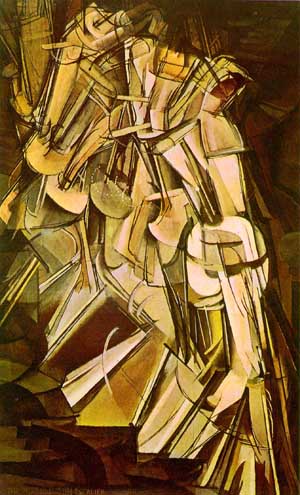
If there was one past event that I am sorry to have missed, it is the International Exposition of Modern Art, now known as the Armory Show, which ran from February 17 until March 15 1913. My regret is that I will never know whether I would have sided with the press and the general public and laughed at Marcel Duchamp’s Nude Descending the Stairs No 2., renamed by one American critic Rude Descending A Staircase (also Rush Hour in the Subway), or would have recognized the genius of Henri Matisse, Picasso, Derain and the other artists whose work I love now?

The 1300 paintings, sculptures and decorative objects included works by Seurat, Degas, Renoir, Manet, Gauguin, and Toulouse-Lautrec. Though it was the Europeans who caused most of the ire, two-thirds of the art works were by rising Americans.

The exhibit included twenty-four works by Matisse, including his Blue Nude and Red Madras Hat, both borrowed from the expatriate Stein family. There were also works by Georges Braque, JAM Whistler, Edvard Munch and many, many others whose works are now the pride of American museums.

The show, housed in an Armory located at Lexington Avenue and 25th Street in Manhattan, was organized by a group of avant-garde American artists headed by Arthur Davies, a then popular but now neglected painter. He had many friends among similarly-minded socialites including Lillie Bliss, John Quinn and Abby Rockefeller who contributed to the cost of the show; still, Davies actually used his own farm, his family’s residence, as collateral. After New York the exhibition traveled to Boston and Chicago, where the students and faculty of the Art Institute of Chicago hung up the effigies of Matisse and Constantin Brancusi.

The Armory show had its champions. Lillie Bliss, one of the Museum of Modern Art’s (MoMA) future founders, is said to have visited every day. Stephen C. Clark, who would be a president of the board of that museum bought the exhibition’s most expensive work, Wilhelm Lehmbruck’s Standing Woman, for $1,620 and later gave it to MoMA. Duchamp’s The Nude Descending the Stairs is now owned by the Philadelphia Museum of Art and Matisse’s Blue Nude is at the Baltimore Museum of Art.

World War I erupted in 1914 and concern about art retreated into the background. In 1929, when MoMA opened, the press that had been so scathing of the Armory show actually welcomed the museum before it opened. The New York Evening World of September 7 exclaimed that the museum was badly needed. It was. Even though many critics and old-time visitors bemoan the size of the present institution, the crowds that clamor for admission attested to the fact that it is one of America’s most popular attractions.    

Posted in Uncategorized | Tagged , , , , , , , , , , , , , , , , , , , , , , , , , , , , , , , | 2 Comments

Lunch at Le Bernardin

iZtbWbmJx_1E

In 1986 when siblings Gilbert and Maguy le Coze arrived from France and opened a seafood restaurant in midtown Manhattan I rejoiced, especially after it became the talk of the town. Eight years later chef Gilbert died of a heart attack. Gourmets and Francophiles like me wept. Fortunately Maguy managed to entice talented Eric Ripert to take over her kitchen.

I had not been to Le Bernardin in decades, but I am happy to report that lunch there surpassed my expectations. As a matter of fact I had not eaten such excellent and refined good food since I fulfilled another life-long desire of eating at the Taillevent in Paris some ten months earlier. The restaurant deserves its status among the world’s fifty best.

The menu at the Bernardin is imaginative and super-sophisticated. Though everything is “fishy,” many items derive their names from classic meat dishes. We started with an amuse-bouche of meat-tasting rillette de saumon.  Traditional rillette is a paté made from shredded pork. Ripert’s version consists of an equal mix of cooked and raw salmon.

Warm Scallop “Carpaccio” Snowpeas and Shiitake Lime-Shiso Broth followed. Scallops are my favorite seafood, and ordering them in a restaurant is usually a mistake because they are over-aged, over-soaked, over-cooked, or all three. Not here. The slivers of scallops, enhanced by bits of shitake mushrooms and snow peas, were barely cooked and spiced to perfection. They had an ideal consistency and tasted of the ocean. When will American restaurants serve scallops with their roe as they do in Europe? However, I had a tough time deciding on the main course, but finally opted for the Poached halibut: “Black Truffle Pot-au-Feu.” It came with two sauces, the first a simple fish broth, the second a velouté of mushrooms. My “server” (the term “waiter” is no longer P.C.) managed to pour one sauce around the halibut, the other on top of it, and they maintained their individuality.

My husband’s Layers of Thinly Pounded Yellowfin Tuna; Foie Gras and Toasted baguette, Chives, and Extra Virgin Olive Oil was perhaps the best food on the menu. I still marvel at the thinness of the toast and the complexity of its flavor. The Poached Skate and Warm Oysters Brussels Sprouts-Bacon Mignonette Dijon Mustard Sherry Emulsion was also extraordinary, though neither of us could have vouched whether the dishes contained all the listed ingredients. Dessert too was delicious, but more standard. Since this was our anniversary we got an extra serving of a chocolate mousse, and vanilla ice cream.

The restaurant, decorated in subdued shades of gray, silver, and brown is both spectacular and restrained. A large part of the space is paneled in honey-colored wood. A mural depicting a moderately agitated ocean dominated the dining room. Another wall is covered with molded strips of aluminum suggestive of a waterfall. On our visit calla lilies filled huge glass vases and a single white spider mum—a stand-in for a water lily—stood on each table.

It was a wonderful lunch and I can’t wait to go back.

Posted in Uncategorized | Tagged , , , , , , , , , , , | Leave a comment