Wishing Upon A Star

Image

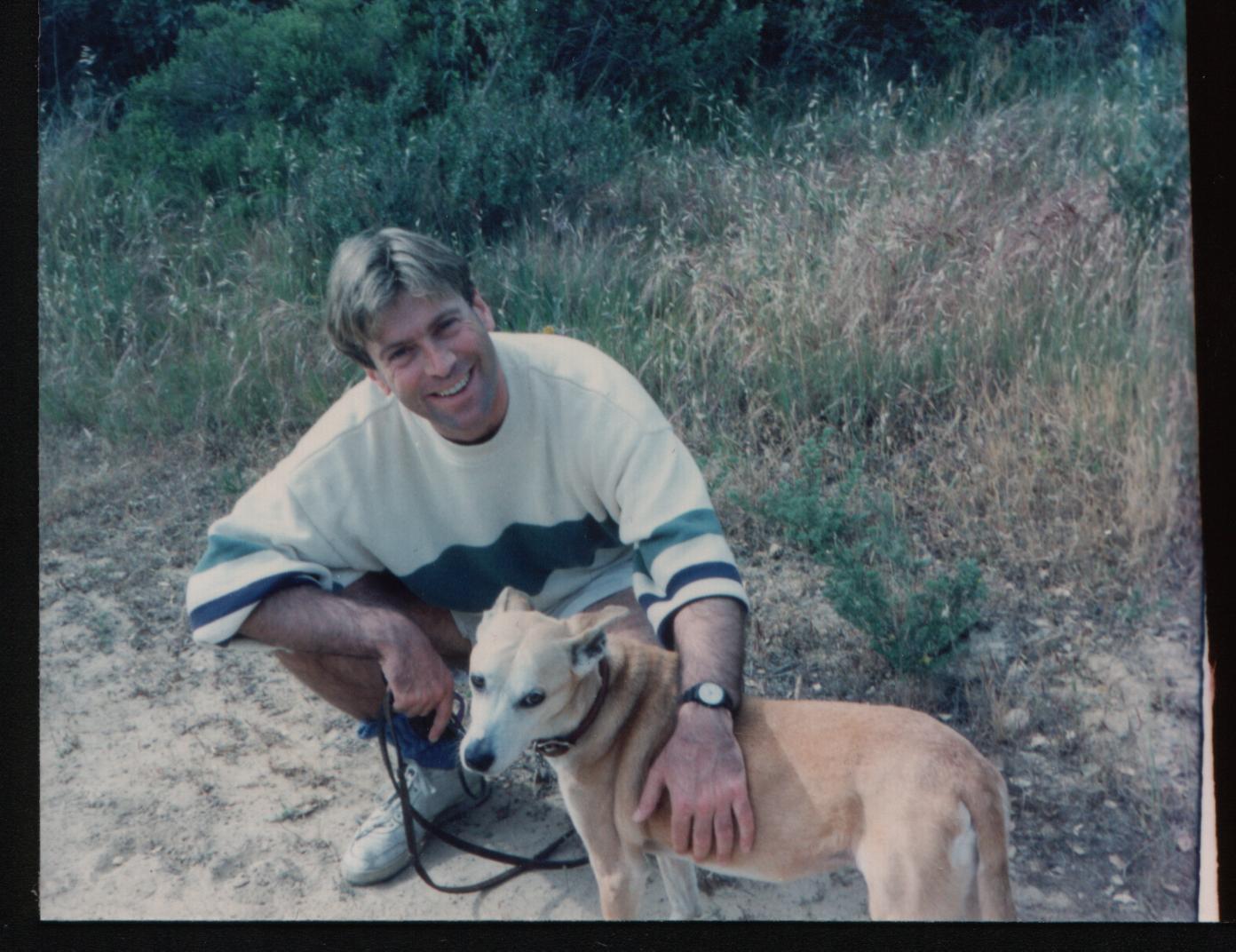
The eve before his birthday, my son David and I would imagine him flying to a magic star where every wish of a four, five, or six-year-old…would be granted. As appropriate the star would be stocked with favorite foods, limitless TV-watching, extravagant toys, a no-homework school and no bedtime.

My son was a big kid, and even later, whenever we were able to share his birthday we would play the magic star game. The accoutrements of the star kept changing. There were sports cars, and luxurious vacations, and designer clothes, and glamorous new boyfriends. From 1987 on, the star grew darker. Though worldly goods still stocked it, our main wish was that it would supply him with a cure for AIDS.

Twenty years ago, February 19th 1993 was the last birthday I shared with David. I had flown out to San Francisco where I cooked a big dinner for him and his many friends. We were happy, laughed, and toasted each other. I remember “the kids” rolling around on a big exercise ball that somehow had materialized in the apartment I had rented for my visits. The month after his visit David flew to South America and developed pneumocystis pneumonia. Three months later he died.

If the magic star had been real, I would have wished for gay liberation to have come a generation or two earlier. My child’s gayness may have contributed to our being so uniquely close. My having been a child of the Holocaust taught me how much discrimination binds you to people who see and love you with unbiased eyes, and I have always had plenty of friends. However I also know all too well that it is not always easy for them to stand up for those whom society considers “unfit.” I remember the veil of pity that passed over the face of sympathetic others to whom I told that my son was gay. I learned to share cautiously.

Prejudice never dies completely, even when the laws change. Jews have fought for equality for over two thousand years, African Americans since the settling of the colonies, gays from the time Adam and Eve were kicked out of the Garden of Eden.

I wonder how different it would have been for David and me to live in a less prejudiced world? Would I have turned out to be less compassionate? Would I have worked less hard for my place in the sun? Would I have been less appreciative of the many good things that came my way?  Most importantly, I know that the U.S. government neglected to fight the novel fatal disease because it emerged amidst male homosexuals and intravenous drug users two discriminated against groups. If it had first affected an upscale group of citizens, I still might have my son.

Even though David is no longer here, February 19th is still a good day for me. He loved life and took such a childlike pleasure in small things, that his family, his friends and I will still feel his warmth enveloping us all, especially on his birthday. Maybe I’ll even revisit our magic star. I never run out of wishes: a green earth, gun control, a more equitable distribution of wealth…David, happy birthday.

Posted in Uncategorized | Tagged , , , , , , , , , , , , , | Leave a comment

The Scream: Or On Almost Owning A Munch

78363

Currently the Museum of Modern Art in New York is exhibiting a version of The Scream  by Edvard Munch. Leon Black, a member of the Board of Trustees, who paid $119.9 million for it at a Sotheby’s. The price is presently the highest ever paid for a painting at an auction.

A few other insightful and disturbing works by the Norwegian master surround the painting in the small gallery on the museum’s fifth floor. I had come an hour before the museum closed, so the crowd that comes to “listen” to the painting’s almost audible scream had thinned. I savored the extraordinary reds, pinks, and oranges of the Oslo sunset, and wondered at the egg-shaped head and the gaping, round mouth of the central character, who had covered her ears to avoid hearing her outburst. The two other Munch’s in the gallery were equally beautiful and troubling. One is a version of Munch’s Madonna and the other, entitled Storm, is of a house with a large hipped roof. Its windows brightly lit, the trees of the desolate landscape are bent by the wind, while a disconsolate family of five stands in front of their threatened abode, all shielding their ears with their hands.

In 1963 my family, including Judy our nine-year old daughter and David our seven-year old son, traveled to Oslo as part of my husband’s year-long European sabbatical. We had spent the day at the then new Munch museum and were completely enchanted by the symbolist painter, so we dragged our poor children to the nearby art gallery run by the painter’s daughter. It turned out that our children charmed the lady, especially after she discovered that she and our son shared their February 19th birthday. We looked at the prices of the drawings and my husband told me that we could possibly afford a print. Our visit to the gallery turned serious. Should we buy a version of the Scream, or of The Sick Child, or …

As I tackled this serious but pleasant decision, my husband poked me in the ribs.  By converting Norwegian into Dollars he had made a mistake by a factor of ten. After all, we could not afford a print.

Years later we discovered that the Munch museum in Oslo was running a raffle. By buying a rather pricey chance we were given a shot at winning a genuine Munch print. We eagerly mailed in our money and lost. The museum mailed us a reproduction of The Vampire, which we had framed and continue to admire. All said and done, we probably enjoy it as much as we would have the genuine article.

Posted in Uncategorized | Tagged , , , , , , , , , , , , , , | 1 Comment

Inventing Abstraction: How a Radical Idea Changed Modern Art

schwitters_1

Fittingly, New York’s Museum of Modern Art opened the centennial exhibition of Inventing Abstraction before the end of 2012. It is a very handsome show, full of varied and vigorous pictures celebrating a new medium that since has swept the world. I enjoyed the show thoroughly and learned a lot. I never realized how powerful these early art works were and I will return to the show before it closes in February.

Upon entering the exhibition visitors view a big chart detailing the interconnection between artists involved with the creation and rapid dissemination of this new art form. There were well-known names like Vassily Kandinsky, Pablo Picasso, Marsden Hartley, Piet Mondrian, Fernand Leger, Robert Delaunay, Sonia Delaunay-Terk, as well as many lesser-known ones.

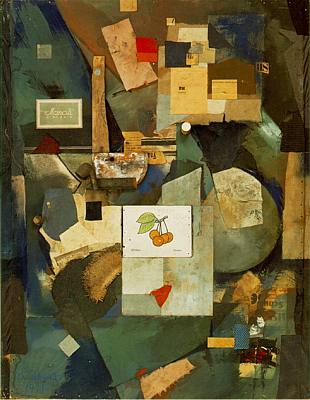
One of the latter includes Kurt Schwitters, who is represented by two rather nice collages: Das Kreisen (The Revolving)  of 1919 and Merzbild (The Cherry Picture) of 1921. I rather liked both. Like my parents, Schwitters lived in Hanover, Germany. He was a casual acquaintance of my mother, a small time art collector. One evening my parents decided to attend a masked ball, a fundraiser of Hanover’s Modern Art Museum, the Kestnergesellschaft. They decided that each was going to spend the evening with a blind date. My father ended up with a cute secretary and my mother with Kurt Schwitters. As the evening wore on my father treated his date to lavish refreshments, while my mother enviously watched the refreshment stand. Finally she approached my father’s table. He proceeded to order some food for my mom, whom he introduced as his neighbor. Smelling the treat, Schwitters too sat down, profiting from my father’s largesse. At the end of the evening, much to the secretary’s regret, for she had apparently expected a romantic end, my father insisted on offering his “neighbor” a ride home.

Half a century later, when I asked my mother why she never bought one of Schwitter’s collages she said: “No, after he was so rude to me?  Besides, I did not like his art work.”

Posted in Uncategorized | Tagged , , , , , , , , , , , , , , , , , , , , , | 1 Comment

Zabar’s and Food Memories

Image

The other day I stopped at Zabar’s. There was a time that I went there weekly though I lived seventy-five blocks further uptown. This was before the food revolution, and the store was the closest one to fill some of my needs: good coffee, a superior selection of cheeses, freshly baked sour rye with a decent crust, dark chocolate, paté, and hard salami. One of my pleasures then was to buy “meat ends.” They were easy on my wallet, but like a grab bag provided surprise. Would I end up with headcheese, sopressa, liverwurst, chorizo, Westphalian ham or, heavens forbid, Bologna or overdone roast beef?

On my recent visit to the store, one of the old deli men was still on duty. He smiled when I asked for Landjaeger, a type of hard German sausage that typically comes as a pair of narrow twinned strips. The sausage was so desiccated that it needed no refrigeration and was consumed by hunters (Jaeger) on long treks. “Yes,” my old friend said, “but its shape” has changed. (In its present moist incarnation the sausage is a pale reminder of its former self.) I also bought Liptauer–cream cheese flavored with paprika, caraway, anchovies, and pepper–which also brings back childhood memories.

I have always loved food, but from way back my tastes have been very specific. I loved my childhood evening meal, which included salads, hard salami, Gruyere cheese, Westphalian ham, new potatoes, and fresh asparagus when in season. I mostly hated the main noontime meal, of chicken boiled to “death” until its skin was loose and flabby, or Irish stew, whose fat congealed and clung to my lips, or revoltingly acid Sauerkraut. I mostly loved broiled foods with their own characteristic taste. Though my repertoire has expanded over the years, I still feel that way.

In my time, children had to finish their plate–a difficult task when one hates a particular food. My parents’ inflexibility taught me an unexpected lesson. When I was about five, my mom and I were locked in battle over the fate of a portion of spinach that I simply refused to finish. I could not leave the table until I had eaten it, and my mother was prepared to sit it out.  Mercifully the telephone rang and she went to answer it in the adjoining room. While she was gone I buried the offending vegetable in a nearby flowerpot and returned to my seat. When my mom came back she praised me for having complied with her demands. Were adults so easily fooled or had my mother such implicit faith in my honesty? I remember being pained by having to lie, but then I still can feel the revulsion with which I contemplated the spinach that particular day. If necessary, I concluded, survival might require cheating.

Posted in Uncategorized | Tagged , , , , , , , , , | Leave a comment

Gun Ownership by the Innocent or Unskilled

Gun shop
In the wake of Newtown, Texas Gov. Rick Perry’s suggestion that we arm schoolteachers so as to prevent future massacres reminded me of the time my mother acquired a revolver.

My mother was a bit paranoid. Our front door had triple locks, and she owned all kinds of weapons. When I was twelve she equipped me with a bag of black pepper I was supposed to strew in the eyes of potential rapists. She instructed me in other tactics of self-defense, which even then I realized were equally impractical. Even the specially trained cannot necessarily prevent a crime. The armed guard on duty at Columbine High School in Colorado was the killer’s first victim.

Back to my mom’s gun. The year we rented a summerhouse on the shore of the Baltic Sea in Germany, she bought a pistol and tear gas bullets. Needless to say, our summer passed without us having to defend ourselves.

Hitler came to power in 1933, and our lives were governed by increasingly severe anti-Semitic measures. Five years later my parents decided to move us to Belgium. When my mother was packing up our belongings she came across the gun. She could not remember whether or not it was loaded, so she pulled the trigger. The apartment filled with tear gas, and for days we suffered from extreme discomfort. In addition, we were afraid that the neighbors, who might have heard a gunshot emanating from a Jewish apartment, would report us to the police.

Nothing happened and my mom packed her gun and it arrived in our new apartment in Brussels, where it was kept in my parents’ bedroom. The Nazis invaded Belgium on May 10, 1940 at 5 AM. A few hours later, officers of the Belgian security arrested us because we were German nationals and thus enemy aliens. A hastily requisitioned hearse drove my family to my school. It had been turned into a makeshift detention center now filled with about 300 other “undesirables.” I doubt that any German spies or saboteurs were amidst us.

Rumors had it that we would be deported. Since this was my school, we knew the concierge (superintendent). At my mother’s request, he allowed me to go to our apartment to fetch valuables and blankets. He asked his fifteen-year-old son to be my escort. Among my assigned tasks was to retrieve my mom’s gun and hide it. I managed to distract my escort long enough to stash it in a heap of coal in our cellar. That evening my mother, sister and I were released, but my father was shipped to France and I did not see him for six years.

After an unsuccessful attempt to escape to France, we returned to our Brussels apartment. My mom again had forgotten whether or not her gun was loaded, so she was afraid that it would explode in the furnace. So, the following winter we had to sift through every pail of coal before burning it. I had hidden the gun well, and the gun it finally reappeared when most of the coal was gone.

My mother now was ready to dispose of the gun. She was afraid to do so because German soldiers occasionally patrolled the streets. Finally we packed the gun amidst food in a enormous picnic basket and we walked it to the outskirts of Brussels. There we threw it a small stream. I often wondered what happened to it.

I have no desire to own a gun. Even if I were in mortal danger, I could not possibly shoot at another human being. Personally I have no desire to hunt, but concede that others love to and I do not want to interfere with their pleasure. I realize that the military and law enforcement agencies need weapons. Beyond that I believe that we all have the right to be out of harm’s way, as much as humanly possible.

Posted in family stories, politics | Tagged , , , , , , , , , , , , , | 3 Comments

Kristallnacht

Interior of Berlin’s Fasanenstrasse Synagogue after it was set on fire during Kristallnacht on November 9, 1938. Photo by Abraham Pisarek, used courtesy of Wikipedia.

Friday, November 9th, was the 74th anniversary of Kristallnacht (The Night of Broken Glass), when the Nazi hoodlums, aided by many ordinary Germans and Austrians, unleashed their fury on their Jewish fellow citizens. One thousand synagogues were burnt. Seven thousand businesses and countless homes, schools and hospitals were trashed and looted. Thirty thousand Jews, including my seventy-year-old Uncle Heiner, were arrested. I have always thanked my lucky stars that my family had already left Germany for Belgium.

Roald Hoffmann

This year I attended a commemoration organized by the Jewish Faculty & Staff Association of the New York City College of Technology in Brooklyn. Roald Hoffmann, born in 1937 in Zloczów, a small town in Jewish-hating Poland, spoke this year. Luck as well as guts, smarts, and material resources had to be on the side of the small fraction of European Jews who survived. Roald’s’s father, a civil engineer, provided essential services to his town, so in 1941 the family was incarcerated in a labor—as opposed to extermination—camp. Two years later, before being shot, the father smuggled Roald and his mother out of the camp. For the next 15 months a schoolteacher hid the two, along with three others, in the attic of his school. Anne Frank’s attic was luxurious by comparison. Light came through a tiny window; there was no heat, so in winter the family froze; there was little food, and of course no toilet. But they survived. It seems miraculous that the five-year-old boy managed to be quiet during his long incarceration. Such stories have convinced me that in life-threatening situations, children sense what is expected of them. When asked, Roald gratefully recalled his mother’s skill at keeping him entertained.

Hoffmann’s mother remarried and the family arrived in the U.S. in 1949. Like many survivors, Roald felt a need to excel. He went to schools in Queens and Brooklyn, eventually graduating from Stuyvesant High School in Manhattan, followed by Columbia and Harvard. In 1981 he won the world’s most coveted honor, the Nobel Prize in Chemistry. As if that were not enough, he is also a widely published playwright and poet.

For many decades, Hoffmann has been in touch with the Dyuk family, who saved him during the Holocaust. While the Communists were in charge in Eastern Europe he jumped through hoops to supply them with extra food. Finally in 2006 he returned to Zloczów. He shared food with the descendants of his benefactors, visited the now somewhat improved schoolteacher’s attic, the old Dyuk family graves, the bare site of what once was the Jewish cemetery, and the mass grave that held his grandfather.

Hoffmann’s talk was entitled “Returning, Remembering, Forgiving.” I know what he meant. Can one truly forgive the Holocaust? Before World Ward II, 4,000 Jews lived in Zloczów; only 200, including five children, survived.

Since I survived the Holocaust as a hidden child in Belgium, my path was much easier than Hoffmann’s. Yet like him, it took me decades to go back to my native land. When I finally did, old childhood memories resurfaced and I almost felt at home. I admired the landscape, the German art and felt that those I met were genuinely friendly and helpful. I also knew that those who perpetrated the atrocities of the past were dead. Life has been good to me and my past has shrunk in importance. Would it be a betrayal of Ruth Iris, who sat next to me in school, or of the millions of others whom the Nazis murdered in cold blood, if I forgave Germany? Have my wounds healed or am I simply oblivious?

I am glad that several times a year I am reminded of the unfathomable reality of the Holocaust having taken place.

*

Roald Hoffmann presents a monthly science series, Entertaining Science, at the Cornelia Street Cafe.

Suzanne Loebl is the author of At The Mercy of Strangers: Growing Up on the Edge of the Holocaust.

Posted in history | Tagged , , , , , , , , , , , , | 1 Comment

Neatness: A Sign of Godliness or Compulsion?

Occasionally, when I was a child, I’d come home from school and find my clothes, books, crayons, drawing pad, and a stuffed animal or two, all piled high in the hall. My mother had had enough of my mess and decided to shame me for all to witness. The procedure humiliated me, alright, but it did not teach me to be more orderly.

When I attended 8th grade at the Lycee de Forest in Brussels, Belgium, my class elected me secretary. It was a backhanded compliment. My classmates admired the speed at which I had mastered French as a second language, my spirited self, my compositions and my loyalty. They were also appalled by my mislaid homework, atrocious spelling, lost gloves and similar mishaps and felt that having me take care of the entire class would teach me to be better organized. I was an excellent class secretary, though I continued to manage in my own disorganized way.

Today my conscientious parents would have realized that I was neither lazy nor stupid, but suffered from ADHD (Attention deficit-hyperactivity disorder) and dyslexia characterized by creativity, poor spelling, and outstanding grades in certain subjects coupled with below-average performance in those that bored me. So I coped with my problems on my own, avoided Ritalin and psychological labels, became self-reliant and learned to think “outside the box.” Even now, I tune out when somebody tries to explain how to use a new gadget, preferring to teach it to myself. My learning disabilities, however, left me with a deep vulnerability about my performance.

I have learned to be pretty good at what I do. My home is filled with unique art, none of it that costly. I never break the bank, but my clothes are attractive. I even manage to accomplish highly detailed tasks. For years I wrote a highly successful 1200-page pharmacology textbook for nurses that listed thousands of drugs, their dosages, mode of action, side effects, and manifold names. I am exacting in my research and my own difficulties enable me to explain complex concepts in simple terms. Just as so long ago my classmates at my French high school recognized my abilities in spite of my apparent disorganization, the American Society of Journalists and Authors (ASJA), my professional association, awarded me their lifetime career achievement award in 2012.

I have learned to be almost neat. Whenever I can afford it, I hire people to keep me sorted out. Still, being almost neat it is a great effort. My desk, filled with exciting projects, is a disaster zone—I straighten it once a week before my housekeeper shows up. Once she leaves I rummage through her neat piles to find the scraps of paper on which I recorded crucial information, or the checks that pay the bills.

When I entertain, I worry more about the neatness of my apartment than about the food I serve. The latter usually is novel and excellent, and dinner invitations to our house are treasured. Instead of lapping up the compliments, I sometimes apologize for my house, which rarely is as neat as that of my friends.

I simply cannot fathom how people have picture-perfect homes. What do they do with the junk mail that arrives every day, the appeals for whales or wolves, or the homeless, or hungry people, or cleft-palate children? I keep these for a while, wondering whether to contribute. What do they do with half-read magazines, the plastic bags, jars and wine bottles, batteries that need to be recycled, the credit card slips that need to checked against the monthly bank statement, the clothes that need to be mended or given away, the left-over food? Most importantly, why do I feel so guilty that my home is not as neat as that of my next-door neighbor?  Why does the world treasure neatness and cleanliness?

The grass seems always to be greener on the other side and I should stop envying my neat friends. According to Google, excessively neat people get chastised as much as us mess pots. Their behavior too runs along a spectrum. They can be middle of the road, or they can be compulsive, obsessive, freakish, or clutter-phobes who need to see a shrink. In our Freudian world it is hard to win!

Posted in Uncategorized | Tagged , , , , , , , , | Leave a comment

The Rockefeller Women

Since 1908, the year Nelson Rockefeller was born here on Mount Desert Island, part of the family has summered here ever since. John D. Rockefeller, Jr. was one of the three fathers of Acadia National Park.

The Rockefeller women have always been independent, even during pre-feminist times. The title of Laura Celestia Spelman’s high school valedictorian address, delivered in Cincinnati during the 1850s, was, “I Paddle My Own Canoe.” “Cettie” was a teacher before she married John D. Rockefeller, Sr., and gave birth to the Rockefeller dynasty.

This year, three Rockefeller women have contributed to the island’s rich cultural life. Susan Rockefeller, technically a member of the fourth generation, presented a short documentary entitled Mission of Mermaids at the College of the Atlantic. The film stresses the contamination of the oceans by oil and plastic, the latter disintegrating into an almost everlasting pulp, and contributing to the depletion of seafood already threatened by over-fishing. The very worrisome message is softened by Susan Rockefeller’s beautiful imagery and creative use of mermaids, which have peopled humankind’s imagination since ancient times. This viewer never consciously noted that the mermaid is Starbucks’ symbol.

Ann R. Roberts, a daughter of Nelson Rockefeller, reissued Mr. Rockefeller’s Roads, which pays tribute to her grandfather’s 56 miles of carriage roads that make the interior of Acadia National Park accessible to hikers, horses, and bicycles. This second edition is enlivened with photographs by Mary Louise Pierson, a fifth-generation Rockefeller.


On August 22, Mary R. Morgan, Nelson’s second daughter, talked about Beginning with the End: A Memoir of Twin Loss and Healing, published fifty years after the disappearance of Michael Rockefeller off the coast of New Guinea. (For details see America’s Medicis, Chapter 14.) It was only following the tragedy of 9/11, which brought many twin-less twins to Mary Morgan’s psychotherapeutic door, that she managed to finish resolving her own grief. The book admirably achieves its “twin” goals of getting the world to know Michael Rockefeller and demonstrating one of the paths of coming to terms with loss.

Half a century is a long time, but for those of us who have lost a soul mate it is like the blink of an eye. I know from personal experience how memoir writing can bridge the gap to the hereafter. Years after I lost my 37-year-old son, I wrote The Mothers’ Group: Of Love, Loss, and AIDS, which did much in helping me cope with a loss I believed I could not possibly cope with.

Posted in Uncategorized | Tagged , , , , , , , , , , , , , , , , , , , , , , , | 4 Comments

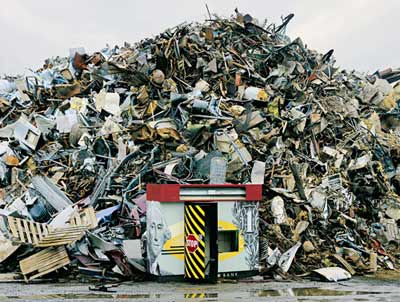
Trash!

Trash!

One of the rituals of my summer is to go to the local dump, more elegantly called the “recycling center.” Mount Desert, my township here in Maine, includes the residences of Martha Stewart, many Rockefellers, Zbigniew Brzezinski (security advisor to former president Jimmy Carter), the family of former Secretary of Defense Casper Weinberger, members of the threatened middle class, and food stamp recipients. Like death, the dump is a social leveler. We all drive up to the recycling center in our gas-gobbling SUVs, Mercedes, newly fashionable Priuses, jalopies or trucks. I arrive in my 15-year old Chevy Malibu. Depending on the day, I feel proud of how conscientious I am about recycling, or annoyed at the bother of schlepping my own trash.

Recycling is not a simple matter. I concentrate on sorting out what I carefully collected over the past weeks: deposit plastic bottles, deposit glass bottles, plain glass, colored glass, office paper, newspaper, plastic (careful here, be sure to read which number plastic is being accepted for recycling this week), milk jugs, cardboard (cut into 3″ pieces), boxboard (but not pizza boxes!). I often examine the non-deposit bottles and retrieve deposit ones and  move these into their proper bins, thereby contributing a dollar or two to the charity chosen by my township. I contemplate answering the center’s request for volunteers “with good minds.” I refrain.

Stimulated by my trip to the dump, and also by Susan Rockefeller’s video, Mission of the Mermaids (see next blog about Rockefeller women), I started surfing the net and read that I produce 4-5 pounds of trash per day. Somebody else estimates that as a nation we generate 230 billion pounds of garbage annually, of which 30% is recycled. Ideally this figure could be 70%. The United States also consumes 70 million bottles of water daily, of which 22 billion empties ended up in the trash in 2006. The worldwide consumption of disposable plates, cups, and eating utensils has reached 430,000,000,000 (or 140,000 items/second). These numbers are so gigantic that I cannot wrap my mind around them. Disposable plates cannot easily be recycled because they are contaminated with food, and coated with or made of plastic. The U.S. utilizes 380 billion single-use plastic bags annually, or 1,200 single-use plastic bags per person/per year. These are the worst offenders because they end up in landfills or are shredded by the ocean, where they impact the marine ecology.

In spite of the acute problem, America is increasing the amount of trash it produces by leaps and bounds. More and more eateries rely on disposable cups, plates, and utensils. Supermarkets pack everything in double plastic bags. “Doggie bags” in restaurants have become mammoth plastic boxes. The packaging of whatever you buy is unreal. Much of it is of the clamshell variety, so hard to open that it provokes “wrap rage,” which often translates into injuries that require visits to the hospital emergency room.

I have no illusion that my blog, with its small readership, will impact the world’s mammoth trash problem, but my surfing did magnify my awareness. I will be more conscientious about taking my shopping bags with me, avoiding the use of paper plates and the like, refusing plastic eating utensils when I buy takeout food to eat at home, buying paper goods made from recycled paper even though they cost more, cleaning with old rags instead of paper towels, taking my own mug to coffee shops…and the list goes on.

We humans seem to respond best to demands made on our pocket book. Los Angeles, San Francisco, Seattle, and other major West Coast cities have passed legislation that bans the use of single-use plastic bags by stores, and/or charge customers for bags. The results are very encouraging. Unfortunately, at present the legislation is accompanied by a sharp increase in the use of paper bags, but that may change. The optimists among us can invest in the cloth shopping-bag industry; defeatists can complain about government interference with lifestyle issues. Never mind, fees and bans seem our only hope for not drowning in our own muck.

Posted in Uncategorized | Tagged , , , , , , , , , , , , , , | Leave a comment

Apologies to Methusaleh

We had left at 7 AM and now my husband and I, both thirty-something, were resting up in the Indian Gardens, the oasis midway between the southern rim of the Grand Canyon and its bottom. Wistfully, we looked at the distant Colorado River that had carved this deep gorge eons ago. Regretfully we did not have the two days it takes to complete the round trip all the way down and had to go back up. Our descent had been effortless, still many faster-walking hikers and teams of mules had passed us—we were never that swift. It was 10 AM and the sun was hot and high.

Suddenly a poorly equipped “old” man appeared. He wore loafers and carried a bottle of Coke. “Where are you going?” we asked. “To the bottom,” he said. “I am seventy and they said that I was too old to rent a mule. Damn it, I have wanted to go to the bottom all my life. I’ll just walk.” By then a group of hikers surrounded this Methusaleh and tried to dissuade him from what was considered a risky undertaking. He would not listen and continued walking.” I shrugged my shoulders and thought, “Old geezers should stay home.”

***

Image

Last summer my husband and I decided to return once more to Monhegan, a small rocky island off the coast of Maine, and one of my favorite places in the world. It measures about one mile by two, but that small space accommodates spectacular cliffs against which the ocean clashes with unabated vigor. Much of the land is covered with a dense forest—the Cathedral Woods. Elsewhere there are minuscule rocky beaches, a lighthouse, a cemetery with weathered stones I once considered being buried in. The island is honeycombed by stony, root-encumbered dirt trails over which I used to skip with ease. No longer. The walk to Whitehead, which used to take me twenty minutes, now took an hour, and Blackhead was near impossible. Suddenly Methusaleh popped into my mind. Now that I am more than his age, I understand him well. Like him I persist, but from the looks I received from those that I encountered on the trails I knew that they thought I should have stayed at the inn, rocking in a chair.

As I struggle, Pete Seeger’s voice echoes in my head:

“To everything (turn, turn, turn)
There is a season (turn, turn, turn)
And a time for every purpose under heaven.
A time to be born, a time to die
A time to plant, a time to reap,
A time to kill, a time to heal,
A time to laugh, a time to weep…”

…and yes, perhaps for me it is “time to stay home.” I’ll start tomorrow…but today I shall don my sneakers, take my walking sticks, two Tylenols and climb up Beech Hill near my summer home in Maine. It is only such a small mountain! Perhaps I’ll make it, perhaps not. Who cares if I make a fool of myself. I wonder…whatever did happen to Methusaleh?

*A biblical character who is said to have lived 969 years

Posted in Uncategorized | Tagged , , , , , , , | 2 Comments