Updates

Sorry that I have not been blogging in such a long time, but I have been busy with the Rockefellers. First of all, JP Morgan selected America’s Medicis as one of its choices for its 11th Summer Reading List. I also have been giving talks about the book. So far I spoke to the docent that conducts the tours at Kykuit, the Rockefeller weekend home in Pocantico Hills, the NYU bookstore, the Westport Library and the Friends of
Acadia, on Mount Desert Island, Maine, where the Rockefeller summered.

I have become more relaxed and confident about my delivery. The last two times I spoke I even have been able to wait for my audience to laugh whenever I built a little joke into my presentation. I will give a few more talks here in Maine. During the fall I will speak in and around New York.  Most exciting, I have been asked to speak at the new Crystal Bridges in Arkansas in December, a month after this spectacular museum opens amidst the spectacular Ozarks. Alice Walton founds the museum entirely devoted to American art. It will be a very exciting trip.

Posted in Uncategorized | Tagged , , , , , , , | 1 Comment

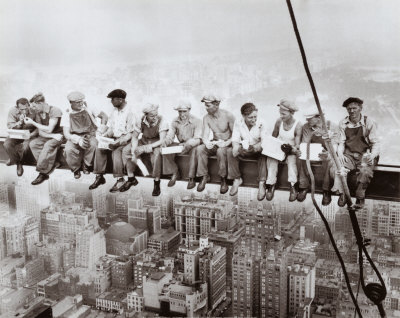
Lunch Atop a Skyscraper

"Lunch Atop a Skyscraper," Charles C. Ebbets

Now that the excitement of the publication of America’s Medicis: The Rockefellers and Their Cultural Legacy is receding, my existence has returned to the day-to-day dullness that often dominates a writer’s life. So I was excited when I received a call from Matthew Miele, asking me to serve as one of his experts concerning the building of Rockefeller Center, a story that figures prominently in my book.

Matthew, an independent filmmaker, is making a film about the iconic photograph “Lunch Atop a Skyscraper.” Most everyone is familiar with the eleven guys that nonchalantly sit atop a T-beam, way above Manhattan, reading their papers, eating a sandwich, smoking, chatting and otherwise relaxing during a well-earned break. According to the Rockefeller Archive in Sleepy Hollows, NY, this is the center’s most requested image. Until Miele came along, the photographer who took the picture was unknown, as well as details about how it was taken. Some expert sleuthing on Matthew’s part revealed not only the identity of Charles C. Ebbets, the photographer, but also that of the intrepid skywalkers to whom America owes the now ubiquitous architectural structures the country bequeathed the world. Matthew Miele is in the process of interviewing the descendents of Charlie Ebbets, as well as those of the construction workers themselves. The film will be released in 2012, celebrating the eightieth anniversary of when this amazing photograph was snapped. I can hardly wait for its release. In the meantime, you may wish to explore some wonderful photographs and other details at www.SkywalkerstheMovie.com.

Posted in Uncategorized | Tagged , , , , , | Leave a comment

Liberators and Protectors

“THE GERMANS PROTECT US…THE ENGLISH LIBERATE US…MAY GOD PROTECT US FROM OUR LIBERATORS AND LIBERATE US FROM OUR PROTECTORS.”

This little ditty came to my mind last week when I learned that the “Allies” bombed Libya to protect the population from Muammar el-Qaddafi’s counter-revolutionary measures. This being 2011, I did not have to wait to see collapsed buildings, fire-tinged explosions, and of course scores of wounded and dead, on the television and on my computer. My heart went out to the innocent, unwilling participants of the conflict, most often generated by a lunatic fringe.

Let there be no mistake. In 1944, when the rhyme about the Germans and the British was pasted all over occupied Brussels, I was hiding from the Germans, and needed to be ‘liberated” if I was not going to be annihilated by the Nazis. I welcomed anything that would speed up the day I would again be free and out of danger. Still, as I wrote in At the Mercy of Strangers: Growing Up on the Edge of the Holocaust, I was concerned about the incessant bombing of military and civilian targets. On April 6, 1943, my diary records, “The sky is filled with airplanes. Where are they headed for tonight?” Another entry, a few weeks later, reads, “I have not yet gotten to the point of rejoicing when the Allies bomb German civilians, but I am no longer against the bombings. It is ‘them’ or ‘us,’ and if I am to perish, I want it to be ‘them’ and ‘us.’”

Since Brussels did not have any heavy industry we only got the occasional stray bomb. One of them hit the house of friends, killing the mother of a newborn. I remember the new grandmother asking God why he had not taken her instead of her daughter.

All that was more than half a century ago, but the world continues to produce madmen and tyrants. When, other imperfect human beings have to decide, is it justified, necessary or even wise to intervene?

**

Suzanne Loebl’s memoir, At the Mercy of Strangers: Growing Up on the Edge of the Holocaust, is available in hardcover and e-book from Amazon.com and bookstores near you. For signed copies see www.SuzanneLoebl.com.

Posted in Uncategorized | Tagged , , , | 4 Comments

Happy Birthday David!

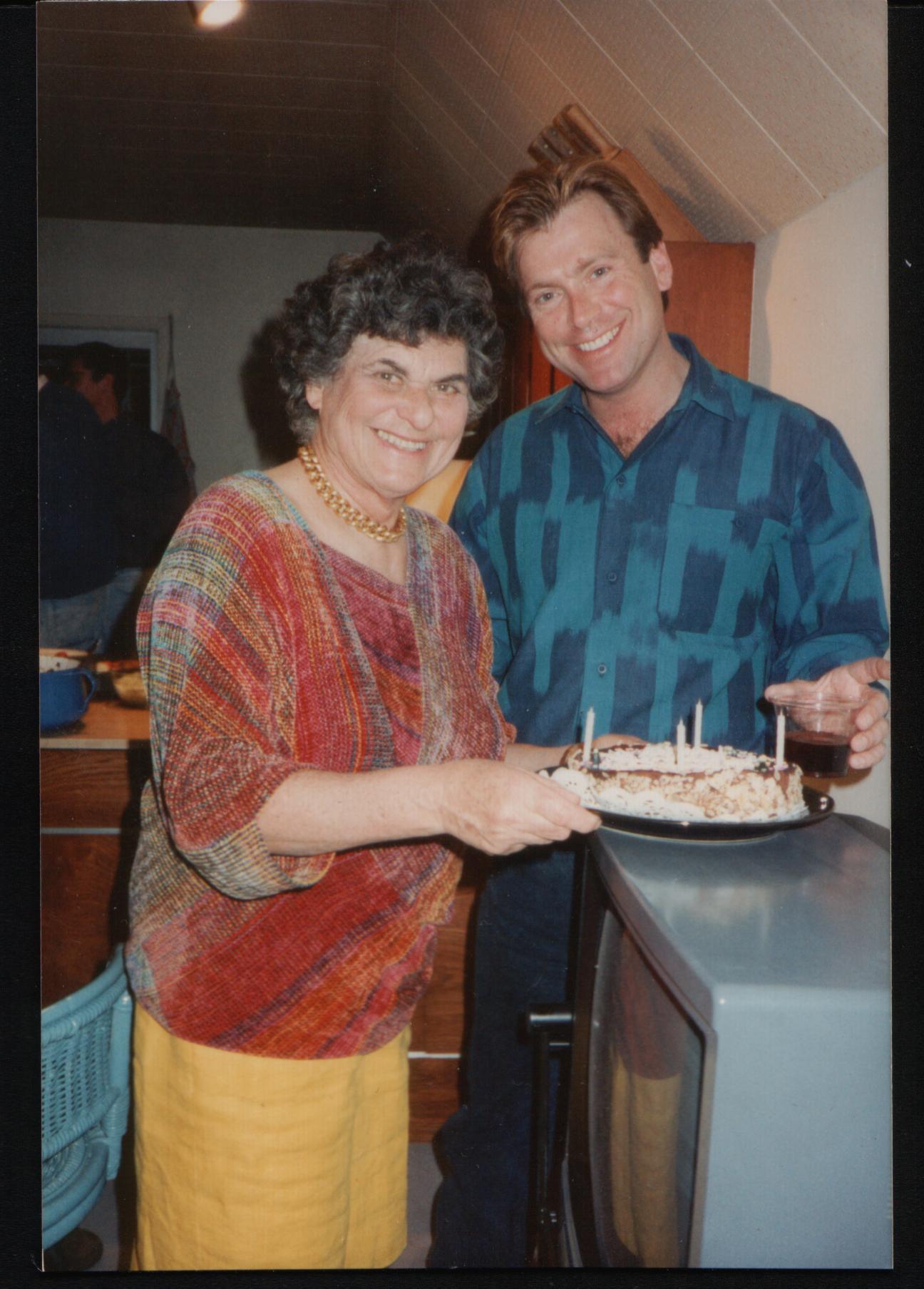
On February 19th my son would have been fifty-five years old. I can’t believe that by now he would be a middle-aged man. Eighteen years ago when we celebrated his thirty-seventh birthday he was a strikingly handsome man, trying to enjoy life to the hilt. Since he always considered his birthday a big deal, I had flown to San Francisco to be with him on his important day. I made him a party in the magic penthouse, which I rented whenever the resident dancer-owner was on tour.

David’s mostly gay friends came over to celebrate and savor my home cooking. I remember uproarious laughter, pesto pasta, salad, and a gooey cake with four candles. That evening, our merry-making centered around a huge gym ball on which the boys took turns rolling. When we blew out the candles that decorated the cake, my wish was that I could go on spoiling my son for as long as I lived. This was not to be. Two months later, David came down with AIDS-pneumonia, and on May 24th, 1993, he died.

I am immensely grateful that David never experienced the diarrhea, weight loss, dementia, and blindness that was characteristic of the then-always-fatal AIDS. I console myself by believing that because he was aware of the fact that his life might be short, David’s enjoyment of whatever time he had left was heightened. My son was comforted by the knowledge that his family fully embraced him and his friends. Still, even in liberated New York and San Francisco, being gay was and is not that easy.

I knew that my son was gay by the time he was three. This being the 1960s, and us being conscientious parents, we followed the advice of our physician and subjected him and ourselves to years of psychotherapy. As an adult, David told me that he was proud and happy to be gay. I believe he was; as every more or less well-adjusted member of a minority group knows, wishing to belong elsewhere is rejecting one’s innermost self. Besides, being gay during the 1970s, when the community fought for their rights at Stonewall and elsewhere, was intoxicating until AIDS darkened the horizon.

Even before that there always was a shadow. I remember going to the movies with David to see Maurice, based on a posthumously published story by E.M. Forster (1879-1970), which the British author started penning in 1913. It is an autobiographical account of the doomed love between two men. Upon leaving the movie house, David was saddened by the hardships his “tribe” had had to face throughout the centuries. “I am lucky,” he said.“My family accepts me, but that’s the exception.”

The New York Time’s headline, “Remembering a Marked Man” (News of the Week, 1/23/11), smacks of the lynching, witch-hunts and burning at the stakes that dominated the southern United States some fifty years ago. One month ago, David Kato, a gay crusader, was hammered to death in his native Uganda. Now the country is considering criminalizing homosexuality. The situation in many other places is not so different. In the US, homophobia is less overt, but last year, many gay teens committed suicide so as to escape the bullying of their friends.

Very likely, the spread of AIDS itself could have been avoided if the government had concentrated on limiting its spread when the disease affected only a few hundred individuals instead of tens of thousands and then millions. Since the initial patient population consisted of gay men, IV drug users, and other minority groups, health officials felt that they could ignore measures that might have halted a worldwide epidemic.

**

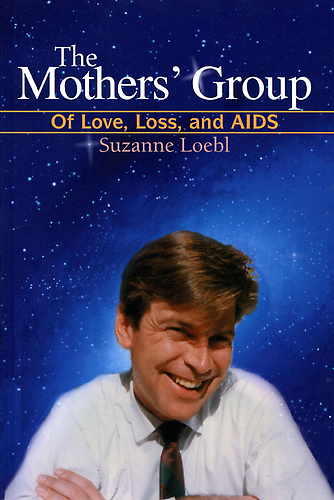
Suzanne Loebl’s memoir, The Mother’s Group: Of Love, Loss and AIDS, is an account of gayness in America as viewed through the eyes of mothers during the last decades of the twentieth century. It is available as a paperback and e-book from Amazon.com and bookstores near you. For signed copies see http://www.SuzanneLoebl.com.
Posted in Uncategorized | Tagged , , , , , , , , , , , , , , , | 1 Comment

Busman’s Holiday: Revisiting MoMA

“Look,” I told my friend Rochelle, with whom I was spending the afternoon at MoMA, “this was Nelson Rockefeller’s gift to the museum on its twenty-fifth birthday.” We were looking at Henri Rousseau’s The Dream, a surrealistic painting in which a naked woman, stretched out on a red velvet couch, is surrounded by jungle plants, lions, elephants and exotic birds. Max Wheeler, an American Cubist painter, happened to be at MoMA when Nelson’s gifts arrived at MoMA in 1954.  He recalled his visit to Rousseau’s Paris studio in 1910, where the unfinished The Dream hung on a wall, whose size was that of the canvas. Wheeler remembered how Rousseau methodically filled the canvas, from left to right, as if he was copying it from an image preformed in his mind. Shortly thereafter, when The Dream was exhibited at the Salons des Independents, the press ridiculed it. Rousseau died shortly thereafter and eventually he gained fame in his native land as well as abroad. Ensuring that glory would come to painters in their life-time was one of the important reasons that Abby Rousseau, as well as her son David, are sponsoring contemporary artists. No question that Rousseau would have been proud to know that his The Dream, as well as his Sleeping Gypsy, have become star attractions at one of the world’s foremost museums of modern art.

I spent years gathering information about MoMA’s art works for America’s Medicis: The Rockefellers and Their Astonishing Cultural Legacy — published in November 2010 by Harper Collins–and now drowned my friend Rochelle with information: “Look at The Girl with the Mirror by Picasso,I urged her, “it is the first painting that Alfred Barr—the founding director—bought with Olga Guggenheim’s blank check; look at the Demoiselle’s D’Avignons, bought with Lilly Bliss’s money; the Lehmbruck statues were given by Abby…that painting used to belong to Gertrude Stein…” If I had not stopped myself, I would have gone on overwhelming her with my stories. In-depth learning about a variety of topics is one of the major benefits of being a writer.

Even though the Rockefellers founded a wealth of museums, MoMA is central to their cultural legacy. Abby and her friends founded it in 1929.  After only six months they opened their first exhibition in six rented galleries, in the Heckscher Building, a Manhattan office building. Nelson, Abby and John D. Jr’s second eldest son, presided over the museum during its adolescent growth spurt, and David, their youngest child, guided it into becoming a mega-museum. All three had the distinction of working with Alfred H. Barr, whom the doyenne hired when he was a mere twenty-seven years old.

As one of many Rockefeller chroniclers, I had the pleasure of unraveling the history and significance of some of the millions of art objects the museum now owns. Of the sixteen chapters that make up America’s Medicis, three long ones are devoted to MoMA. For the museum will never be the same. As my visit with Rochelle proved, I almost feel as if I owned the place! How “rich” can one person get? It is almost as if I had won the lottery.

Posted in Uncategorized | Tagged , , , , , , , , , | 2 Comments

The Internet Drives Me Nuts!

I spent most of my morning navigating the net. You may think that I spent my time doing
in-depth research on a new topic for my next book, or reading the newspaper, or gloating
over the latest scandal. No, I was trying to look at a picture of the dryer recommended by
my salesman and get some airline tickets.

First the dryer; I googled the GE website and found an army of appliances—too many to look at. I tried to plug in the desired model number—no way. Instead they offered to list their merchandise from the cheapest to the most expensive, from expensive to cheapest, from purple to avocado, and so forth. After a prolonged search I found a customer service number and dialed it. A telephone operator announced that it was no longer in service. They suggested that I press #1 where I would get the correct number—free of charge + $500 worth of free groceries. I pressed #1. Someone with an Indian accent answered and offered me the groceries. I refused. “Why would you refuse $652 worth of free groceries?” the man asked. I answered that I would take the food if I did not have to acquire a new credit card. Huffed, he gave me another non-working telephone number. After another futile quarter of an hour I decided to do without the dryer.

Then I tackled the airline tickets. It is not enough to know that you want to go to Puerto Rico—you have to know the code of the airport. If you don’t, you cannot get a timetable. The code thing is a problem in New York, since it has three airports. After I passed that hurdle, my computer requested my frequent flyer number. Since this was the first time I was flying on that particular airline I did not have a number, and the site refused to accept this fact. I struggled on. Eventually I successfully called customer service, which was going to get me the tickets for an additional $15 per ticket. As a compromise, the nice clerk walked me through the on-line buying process, which of course took longer than if she had done it alone.

Frustrated by my morning’s activities I called my friend Olga. She was triumphant. It had only taken her two hours to book a ferry to Nantucket for next July. She found the home page of the ferry, but she could not sign in. She did not have her pin. Eventually she dug it up. Then her “profile” was lacking. But after she filled in the name of her husband, the make of her car, and the breed of her dog, and tried to proceed, she did not have the schedule and had to start all over again. Then she did not have the security code, then…

That same day AOL, which manages my e-mails, had its own troubles. My stash
of important saved e-mails vanished! AOL claims that it has them and will return them
when they are through doing “maintenance.” Let’s hope so, but 24 hours later they are
still gone.

Neither Olga nor I are computer-illiterate. She created and curates a prize winning
blood group registry that is crucially important for blood transfusions and her registry
saves lives. I just completed a complex 465 page-long biography of the Rockefellers,
which went to the printer as it issued from my computer.

I shudder to think what the future reliance on computers will do to the efficiency of our country. More threatening still; we don’t need nuclear weapons. A few well designed computer viruses and worms will grind our way of living to a halt.

Posted in Uncategorized | Tagged , , , | Leave a comment

Christmas 2010

I had a perfectly good Christmas Eve. My husband and I went to see Les Ballets Trockadero de Monte Carlo, a troupe of talented men who dance on toes and perform spectacular ballets with just enough of a comic edge to keep the audience, consisting mostly of dance aficionados, roaring. Then we had dinner at The Gascogne restaurant, which served a pleasant meal ending with a traditional Buche de Noel (Christmas log) cake flown in from Paris. Still, I am sad. I cannot help reminisce about all the Christmases of my life and the people, many long gone, who were part of it. Holidays can be depressing, and the glitter that blankets the land increases one’s obligation of having to join the general insouciance and merriment.

My mother was a Christmas junkie. Her German Jewish ancestors had never celebrated Christmas, but she felt assimilated enough to have a magnificent tree, hung with chocolates and cookies and lit with real beeswax candles. She had spent weeks assembling gifts. Like in the Nutcracker ballet, the doors to the room where all this magic had been assembled were opened on Christmas Eve.

Actually my mother’s enthusiasm for Christmas was misplaced. Hitler had come to power in 1933, and assimilation for us was wrong. Even though I was very young, I instinctively knew that this was not really my holiday. Actually, a celebration to mark the winter solstice is probably as old as mankind itself. Long after we stopped having a tree, mine included a skiing trip to Vermont soon after my husband and I became engaged and bathed in our young love, another one to Austria, and another still to Sanibel, FL, where the tinsel and Santas on their sleighs looked particularly odd amidst the palm trees. After we had children, I transplanted my mom’s candles into a menorah and my offspring were happy with the gifts we proffered, though in my eyes they never seemed as good than those I had received so long ago.

I also still pay respect to the Christmas of my childhood by attending a candlelight carol service at a church and listening to a retelling of the birth of Jesus, a poor Jewish baby, born in a stable because “there was no room at the inn.” In hindsight, one wonders whether the inn was really full, whether Joseph lacked the appropriate “credit card,” or whether his family was the “wrong color” or social class. After Jesus grew to adulthood, he went about preaching about injustice and corruption. He also asked for reforms and forgiveness, and performed some miracles. He did not live very long, because he was perceived enough of a threat to the authorities to be put to death.

Ever since, his martyrdom has been used to fight the most atrocious and bloody wars. Other wars were fought on behalf of his father or another prophet. Our own age is especially bloody with people brandishing swords, explosives, airplanes and suicide bombers. Basically, I have concluded, all this violence has nothing to do with religion, but is due to humankind’s rapacious nature. No wonder that I hanker back to my childhood when I was too young to understand all that.

Posted in Uncategorized | Tagged , , , , | 2 Comments

Museum of the American Indian

During the thirty-nine years I lived on Riverside Drive and 156th Street, I overlooked the Audubon Terrace, the common front yard of a series of small museums. In 1839, James Audubon acquired a large tract of land and built a mansion called Minniesland in honor of his wife. The great naturalist’s home was part of the country estates that bordered the Hudson. During the early 1900s they were replaced by elegant apartment houses. Trinity Church built a large uptown church on 155th Street, and a small cultural center occupied most of the block bordered by Broadway, 155th and 156th Streets. Anna Hyatt Huntington, one of America’s great sculptors, decorated the terrace with magnificent Spanish allegorical figures, and her husband, a museum builder, founded the extraordinary Hispanic Society with its cache of Goyas, Zurbarans and Velazquez. Both are still there and merit a visit.

Audubon Terrace also included the Museum of the American Indian, founded in 1922 by George Gustav Heye. Starting in 1897, he had assembled a magnificent collection of American Indian artifacts, which I visited with my children on many a rainy Sunday. It was filled with Native American clothing, blankets, canoes, pottery, arrowheads, headdresses, totem poles, maps, dioramas, and infinitely more. We never tired of going.

By 1980, the museum had become impoverished and there was not enough money or space to adequately take care of the collection. Besides, the neighborhood had deteriorated and there were very few visitors. After years of legal wrangles, the bulk of the collection went to the Smithsonian’s new National Museum of the American Indian in Washington, DC.  However, since the move violated Heye’s will, which stipulated that the collection had to remain in New York City, a compromise was needed. As David Rockefeller was revitalizing Lower Manhattan, he suggested that the now surplus Alexander Hamilton Beaux Art’s U.S. Customs House could serve as a satellite American Indian museum. On October 20, 2010, New York’s George Gustav Heye Center welcomed the return of 700 works of Native American art from throughout North, Central, and South America. David Rockefeller was on hand to celebrate the opening of a permanent exhibition entitled the Infinity of Nations.

I too went on opening day and was impressed by the logic of dividing the exhibits into ten nations ranging from the Andes in the south and the Subarctic and Arctic in the north. The beauty of the baskets, the headdresses, the bas-reliefs and the pottery floored me, and I vividly relived the long-ago rainy afternoon when my then-young children delighted in visiting the museum.

New York, December 16, 2010

Posted in Uncategorized | Tagged , , , , , , , | Leave a comment

Branching

The world has changed and so has writing, in times past conceived in the privacy of the heart and soul. Many writers, I presume, tossed their musings in the garbage. Others, like Emily Dickinson, kept them locked in a trunk or, like Franz Kafka, ordered them destroyed after their death—a directive fortunately ignored by his executor. Others still wrote lengthy letters to a few friends, and a few became publicly acclaimed witnesses of their time and place.

Today we all blast away at our computers, sharing our innermost thoughts and intimate details with the world at large. Let me join the fray, though I hope that I will omit the boring stuff that fills part of every day. “Branching: The Brave New World of Blogging,” so named in memory of a friend, is about various subjects that cross my daily path. It relies on the skills that I acquired in a lifetime of writing about science and medicine, nutrition, gay and lesbian issues, and art.

Just now I am publicizing my new book: America’s Medicis: The Rockefellers and Their Astonishing Cultural Legacy. The book is gathering a ton of reviews: praise from those who approve of the Rockefellers and stern words from those who remember the tactics Standard Oil used to attain its monopoly.

Like my books, I have many facets. I was born in Europe and still retain some of its old-world sensibilities. I love America and am pained by its travails. I am a wife, mother, a grandmother; above all I love writing and do it well enough to have used it to earn my livelihood. I am a born optimist. I love art, the outdoors, food and above all people. I hope that “Branching” will give you and me pleasure.

New York, December 15, 2010

Posted in Uncategorized | 1 Comment

Entering the brave new world of blogging.

Stay tuned.

Posted in Uncategorized | Tagged , , , | Leave a comment